Fujifilm X100VI vs Ricoh GR IIIx: Premium Compact Showdown
Two of the most loved APS-C premium compacts, compared on size, focal length, viewfinder, and price so you can pick the right pocket camera.
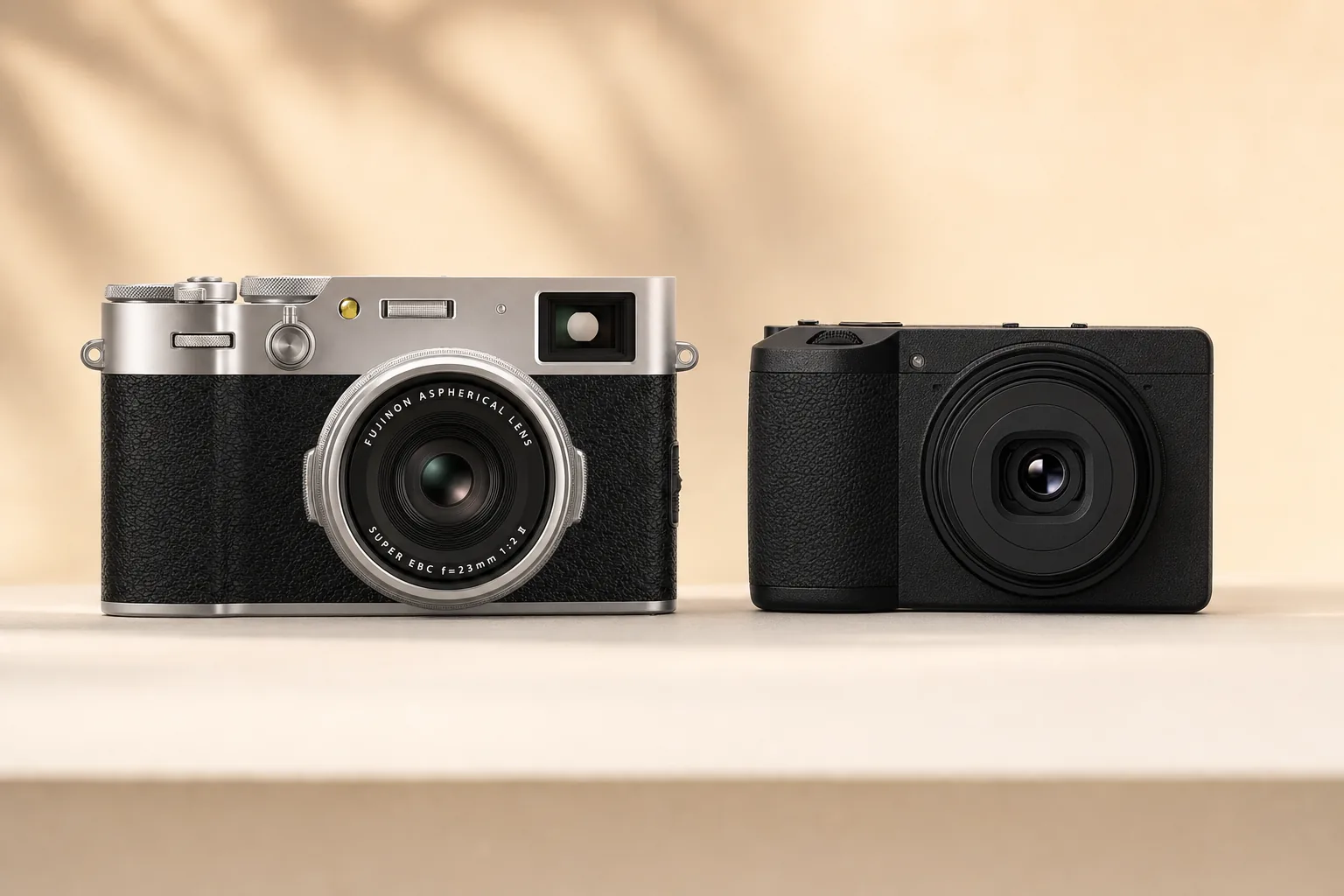
The Fujifilm X100VI vs Ricoh GR IIIx comes down to one honest question: do you want the more capable, more versatile premium compact, or the smallest serious APS-C camera you can actually carry every day? The X100VI is the do-it-all flagship with a 40MP sensor, in-body stabilization, and a hybrid viewfinder. The GR IIIx is a featherweight 24MP street tool built for speed and pocketability. Both shoot beautiful APS-C files from a fixed lens, but they’re built for different photographers.
Fujifilm X100VI vs Ricoh GR IIIx at a glance
| Spec | Fujifilm X100VI | Ricoh GR IIIx |
|---|---|---|
| Sensor | 40.2MP APS-C X-Trans CMOS 5 HR | 24.2MP APS-C CMOS |
| Lens (focal length) | 23mm f/2 (35mm equiv.) | 26.1mm f/2.8 (40mm equiv.) |
| Image stabilization | 5-axis IBIS, up to 6 stops | 3-axis sensor-shift (SR) |
| Viewfinder | Hybrid OVF (0.52x) / EVF (0.66x) | None |
| Film simulations | 20 modes (incl. REALA ACE) | None (Image Control presets) |
| Snap Focus | No | Yes |
| Built-in ND filter | No | Yes (2-stop) |
| Video | 6.2K/30p, 4K/60p internal | Full HD 1080/60p only |
| Weight (with battery) | Approx. 521g | Approx. 262g |
| Dimensions (W×H×D) | 128 × 74.8 × 55.3mm | 109.4 × 61.9 × 35.2mm |
| ISO range | 125-12800 (ext. 64-51200) | 100-102400 |
| Weather sealing | Only with adapter ring + filter | None |
| Price (typical street) | Higher; often backordered | Lower; widely available |
Where each camera wins
The Fujifilm X100VI wins on capability and versatility. Its 40.2MP X-Trans sensor resolves far more detail than the GR IIIx’s 24MP chip, which gives you real cropping room from a fixed lens. Useful when you can’t move your feet. The 5-axis IBIS (rated up to 6 stops) lets you hand-hold slow shutter speeds the GR IIIx simply can’t match, since the Ricoh’s 3-axis sensor-shift system is more modest. The hybrid viewfinder is the other big differentiator: you can frame through an optical finder or switch to a 0.66x electronic one, while the GR IIIx has no viewfinder at all and relies entirely on its rear screen. Add 20 film simulations (including the newer REALA ACE), a brighter f/2 lens, and 6.2K internal video, and the X100VI is the more flexible all-rounder for travel, portraits, documentary work, and video.
The Ricoh GR IIIx wins on true pocketability, speed, and value. At roughly 262g and just 35mm thick, it genuinely disappears into a jacket or jeans pocket; the 521g X100VI does not. That size is the whole point: the GR IIIx is the camera you actually bring. Its Snap Focus mode pre-sets a focus distance so the shutter fires instantly with zero focus lag, which is why it’s a cult favorite for street shooters who need to grab a frame before the moment passes. A built-in 2-stop ND filter, a slightly longer and more flattering 40mm-equivalent field of view, and a meaningfully lower price round out its case. It’s also far easier to buy. The X100VI has been chronically backordered since launch, while the GR IIIx is generally in stock.
Lens and field of view
This is a subtle but important split. The X100VI’s 23mm f/2 lens gives a 35mm-equivalent view: the classic reportage focal length, a touch wider and great for environmental shots. The GR IIIx’s 26.1mm f/2.8 lens renders a 40mm-equivalent view, slightly tighter and closer to how the eye naturally frames a scene, which many photographers find more natural for portraits and tighter street compositions. The X100VI’s f/2 aperture also pulls in more light and yields a bit more background separation than the GR IIIx’s f/2.8.
Who should buy which
Buy the Fujifilm X100VI if you want one camera that does almost everything well (high resolution, stabilization, a viewfinder, Fujifilm’s color science, and capable video) and you don’t mind the larger body, higher price, or hunting for stock.
In our catalog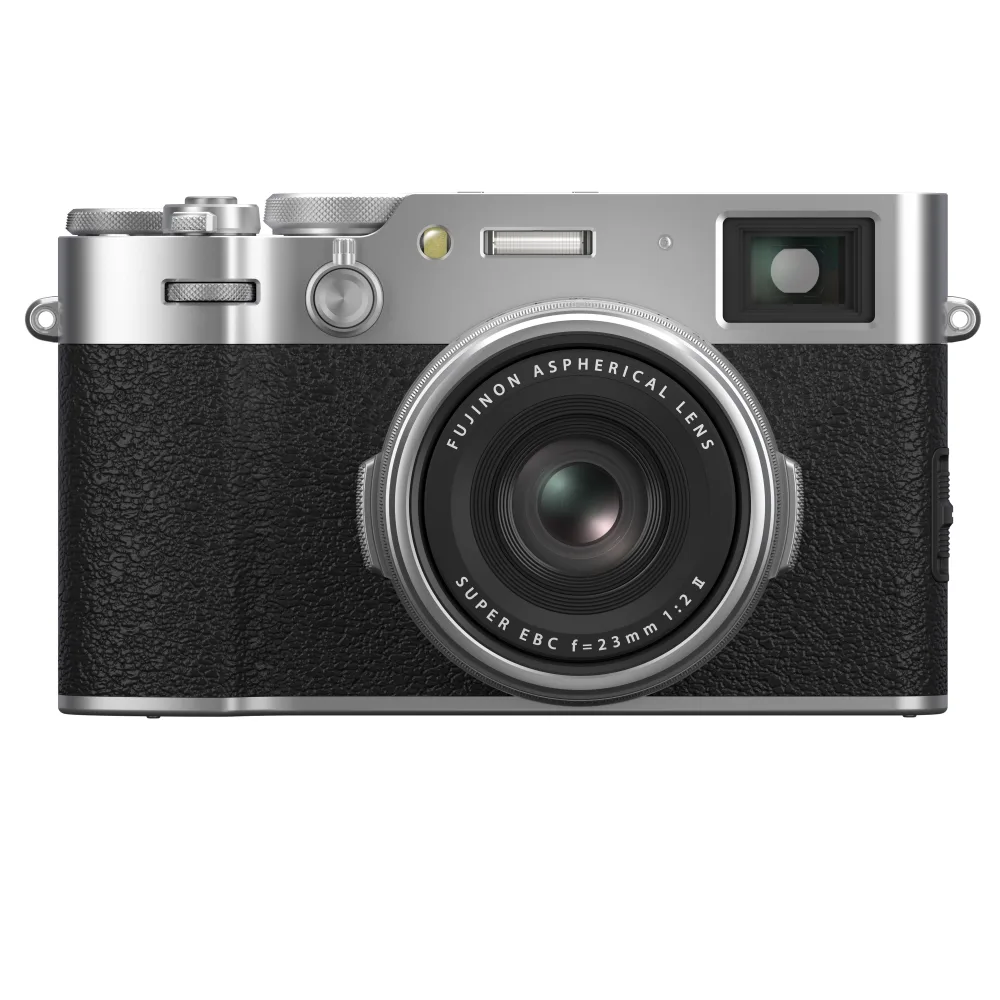 Fujifilm · APS-C · CompactFujifilm X100VIfrom $1,799See price comparison →
Buy the Ricoh GR IIIx if your top priorities are carrying a real APS-C camera every single day, shooting fast on the street with Snap Focus, and spending less. It trades the viewfinder, resolution, IBIS strength, and video for the smallest, quickest, most affordable package here.
In our catalog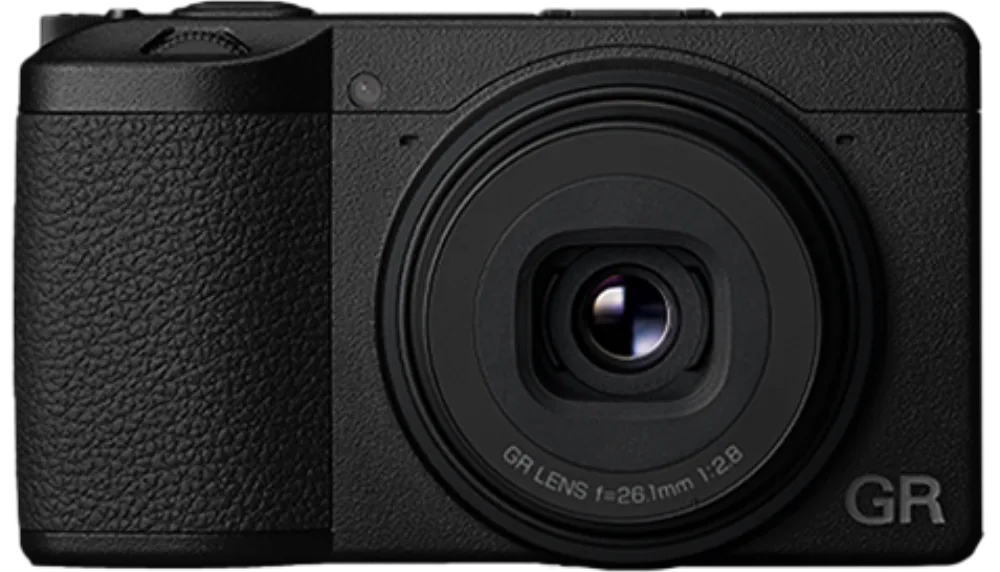 Ricoh · APS-C · CompactRicoh GR IIIx$1,250See price comparison →
Bottom line
The X100VI is the more powerful and more versatile premium compact; the GR IIIx is the more pocketable, faster, and more affordable one. If you want a flagship that can be your only camera, the Fujifilm is worth the extra weight and the wait. If you want the serious-image-quality camera that’s always with you, the Ricoh is hard to beat, and far easier to find on a shelf.
Find the camera worth buying
We compare live listed prices and link you straight to the lowest one. No fake discounts.