— Camera buying guides —
Guides
Comparisons, buying guides, and plain-English explainers. No hype, no fake scores — just what's worth knowing before you spend.
24 guides · Updated regularly · Tampa, FL
More Guides
The Best Camera for Video in 2026: Honest Picks & Real Prices Not all cameras shoot video equally. We track the live prices across retailers to find the best video-centric cameras for every level, from hybrid shooters to dedicated cinema creators. Read → Mirrorless vs DSLR in 2026: Which Camera Should You Buy? Mirrorless has won the future, but DSLRs still deliver incredible value. We break down the real differences in autofocus, video, battery life, and price—and help you decide which system fits your shooting. Read → The Best Point-and-Shoot Camera for 2026: Honest Picks & Real Prices Premium compacts are alive and well—but not every hot model is easy to buy. We track live prices across retailers to find the real best deal on the right camera for your pocket. Read → 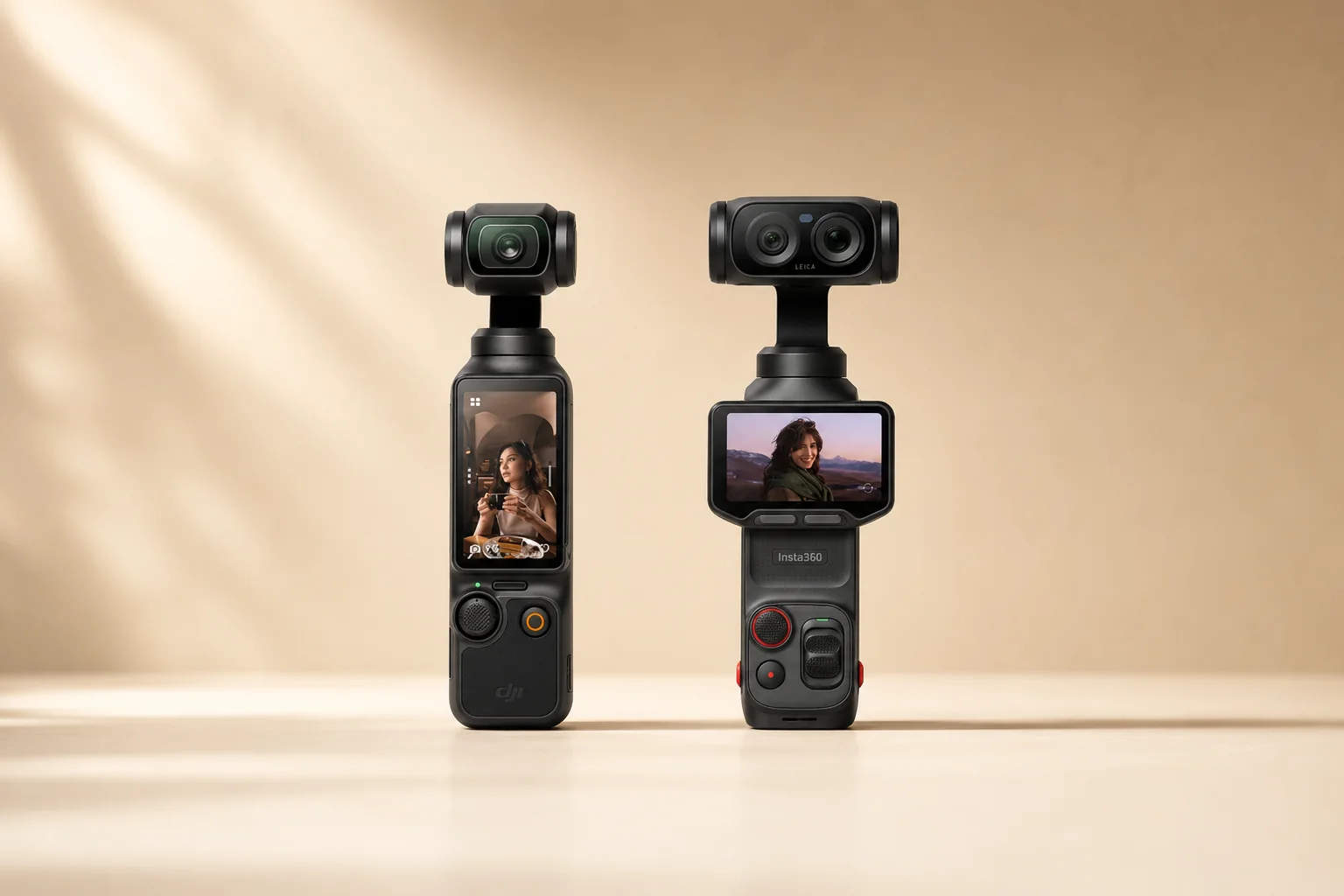 Insta360 Luna Ultra vs DJI Osmo Pocket 3: Which Pocket Gimbal Wins? A practical comparison of the new 8K Leica-tuned Insta360 Luna Ultra against the proven 1-inch DJI Osmo Pocket 3, covering price, image quality, and who each one is for. Read → The Best Camera for Beginners in 2026: Honest Picks & Real Prices You want a first camera that won't leave you confused or overpaying. Here are the models that deliver the best balance of image quality, autofocus, and value — backed by live price tracking across every major retailer. Read →
 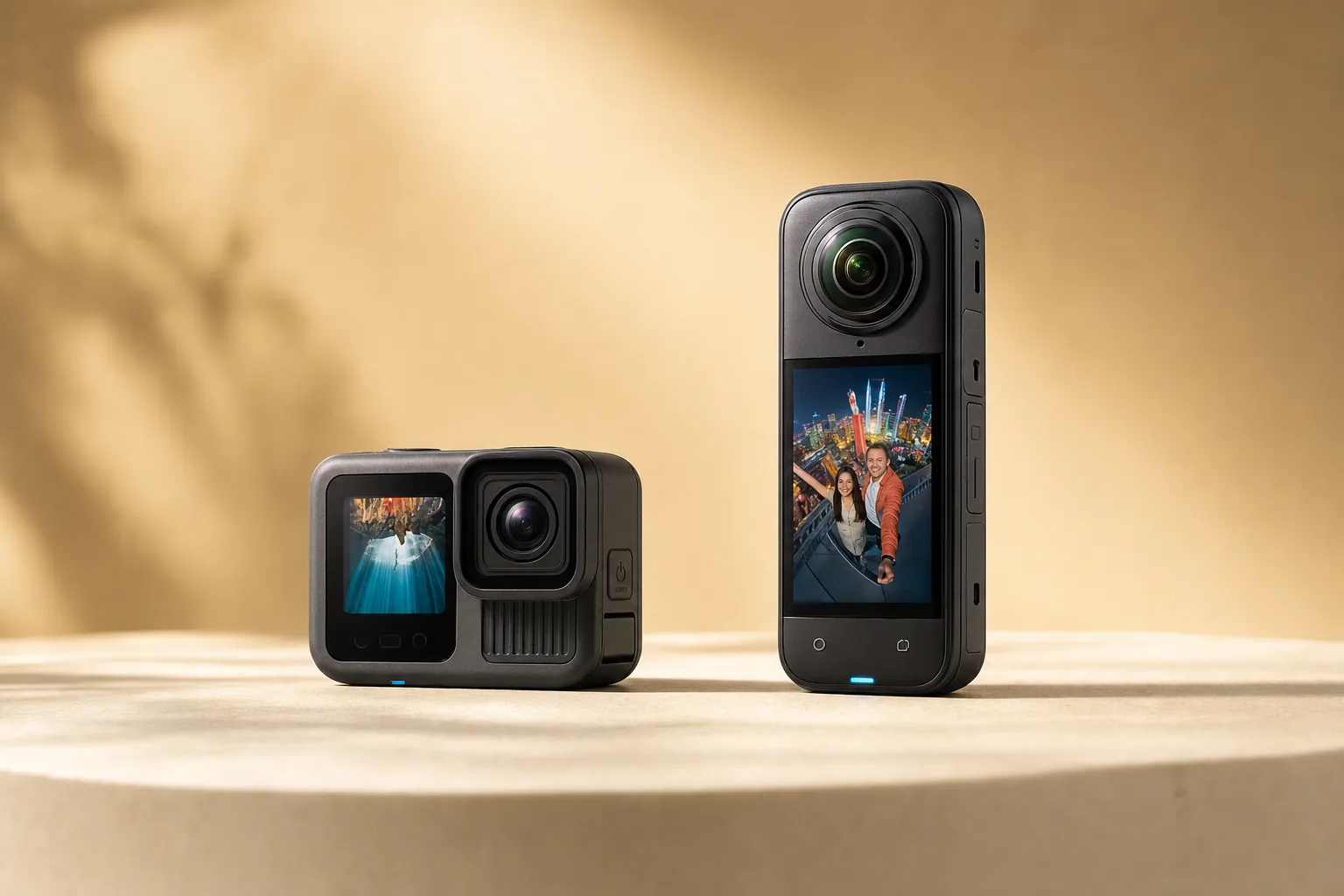 Insta360 vs GoPro: Which Action Camera Should You Buy? A buyer's guide to choosing between Insta360's flexible 360 and flat action cameras and GoPro's traditional rugged flat-lens action cams. Read →
 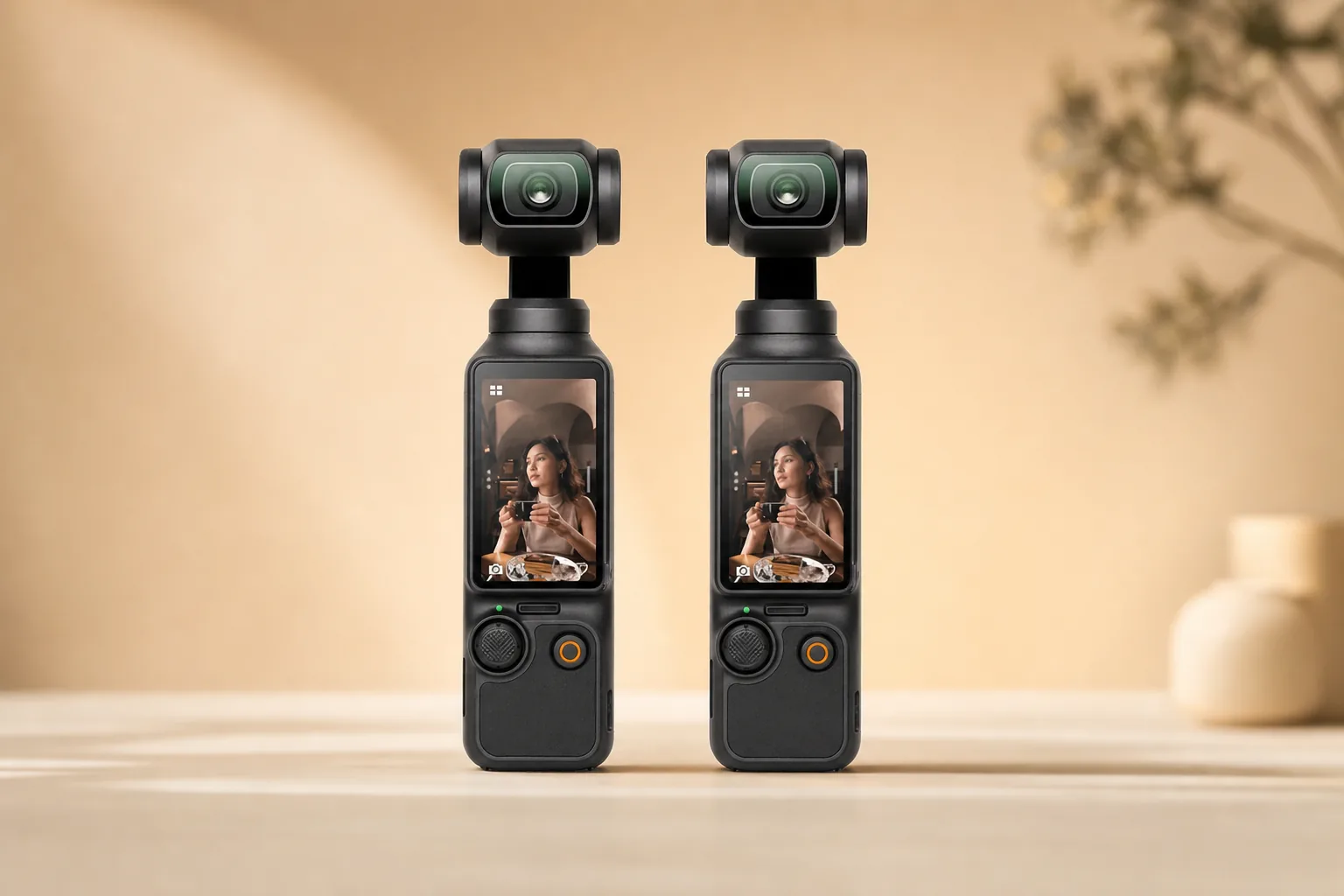 DJI Osmo Pocket 3 vs Pocket 4: Should You Upgrade? A clear-eyed look at whether the newer DJI Osmo Pocket 4 is worth it over the proven Pocket 3, focused on the upgrade decision and price. Read →
 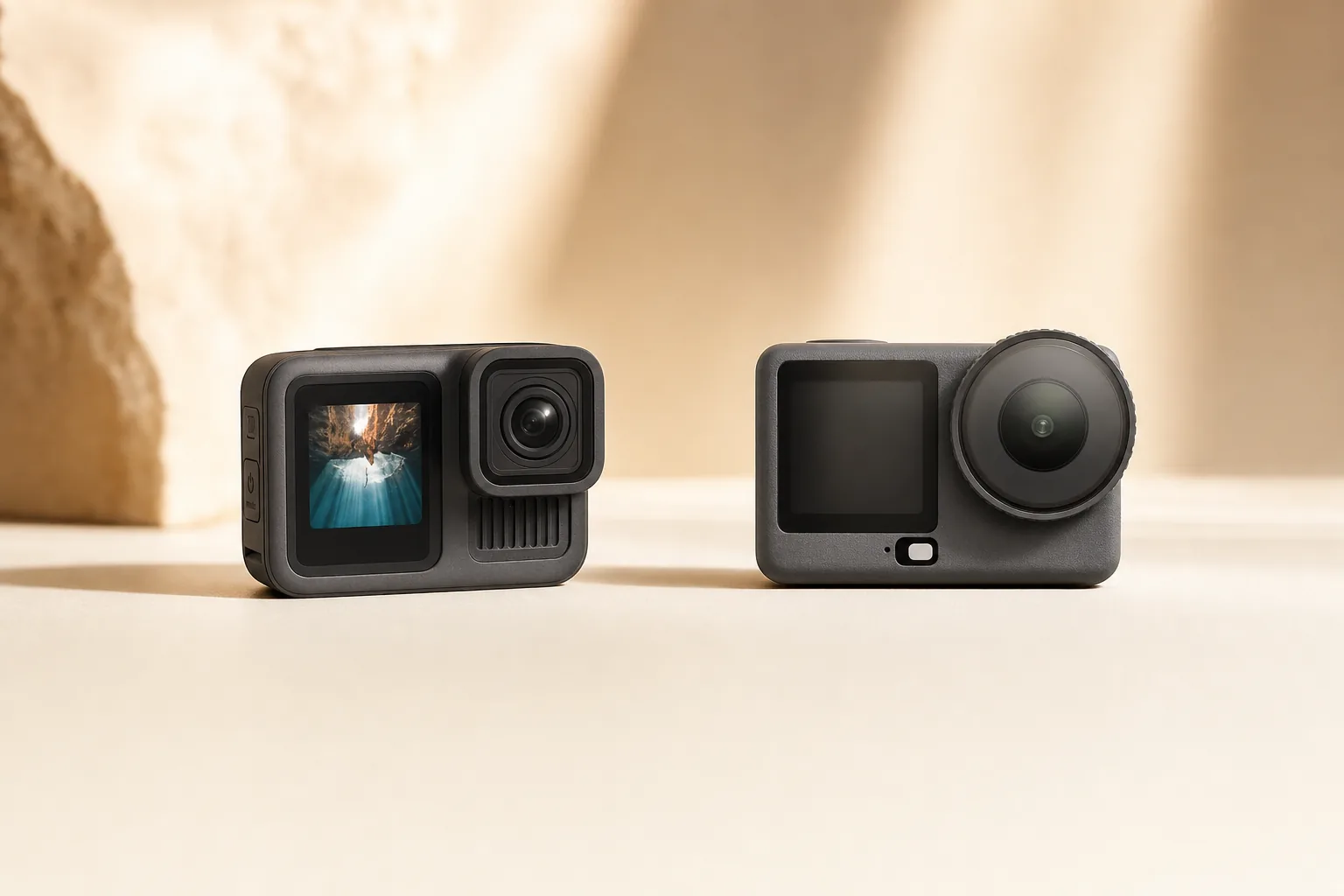 GoPro Hero 13 vs DJI Osmo Action 6: Action Cam Face-Off A head-to-head comparison of the GoPro Hero 13 Black and DJI Osmo Action 6 flat action cameras, covering price, ecosystem, and who each one fits. Read →
 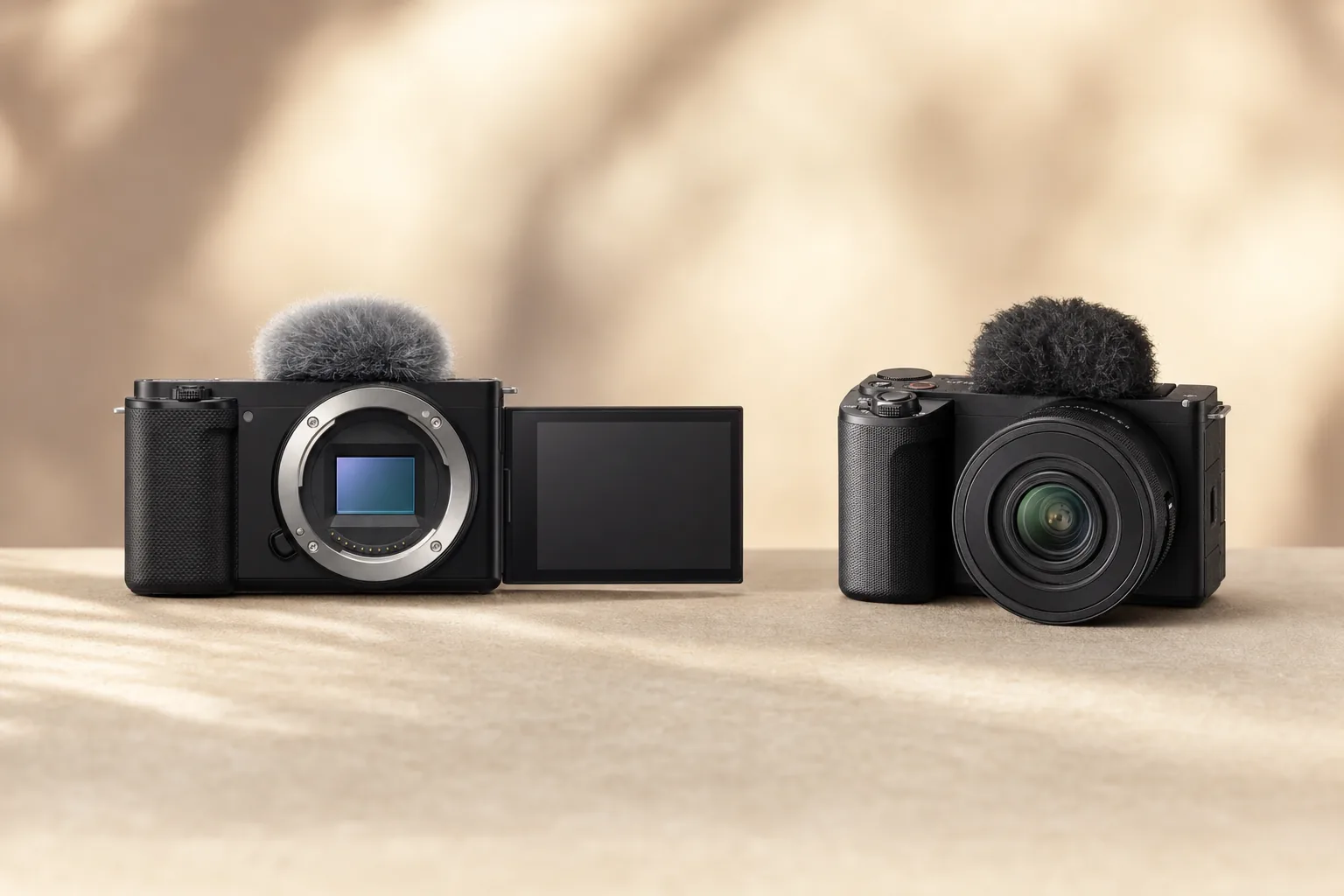 Sony ZV-E10 vs ZV-E10 II: Is the Upgrade Worth It? Both are APS-C vlogging mirrorless cameras, but the ZV-E10 II adds a newer sensor and better autofocus. Here's whether the price jump is worth it. Read →
 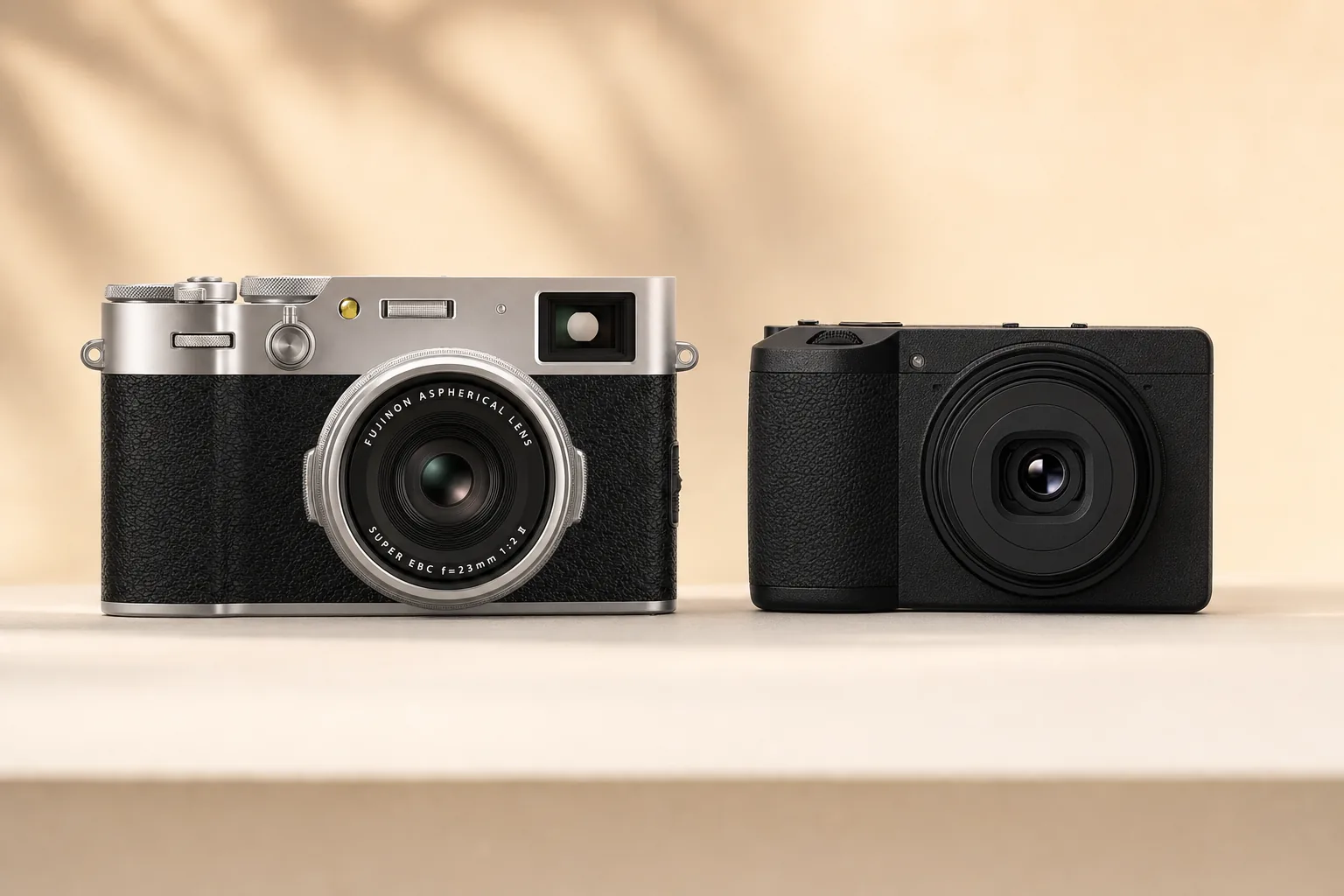 Fujifilm X100VI vs Ricoh GR IIIx: Premium Compact Showdown Two of the most loved APS-C premium compacts, compared on size, focal length, viewfinder, and price so you can pick the right pocket camera. Read →
 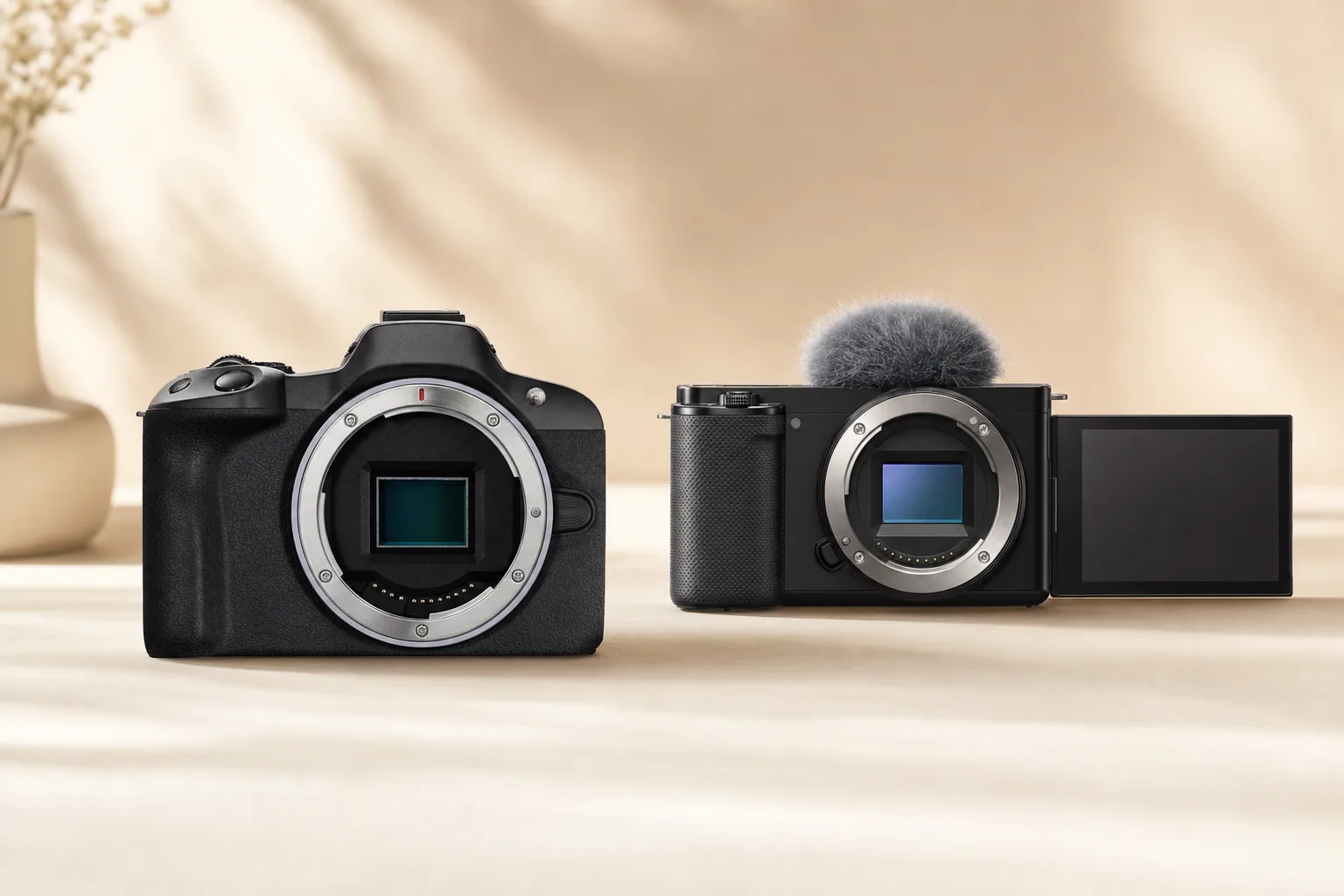 Canon R50 vs Sony ZV-E10: Best Entry Mirrorless for Creators Two budget APS-C mirrorless cameras aimed at new creators. The R50 leans photo-and-hybrid with a viewfinder; the ZV-E10 is built for vlogging. Read →
 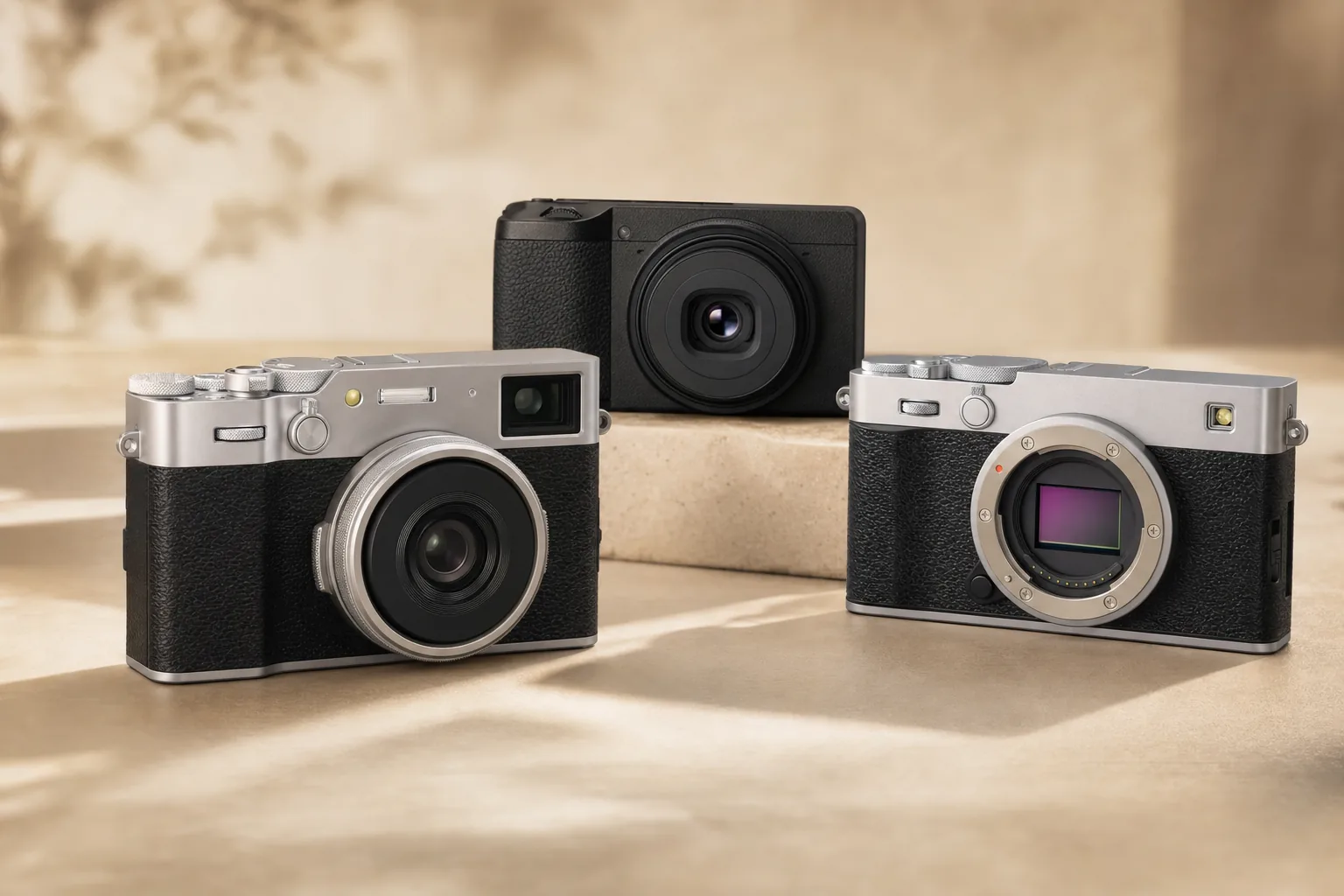 Fujifilm X100VI Alternatives You Can Actually Buy Right Now The X100VI is perpetually backordered. Here are in-stock alternatives, from the pocketable Ricoh GR IIIx to the Fujifilm X-E5, that deliver a similar experience. Read →
 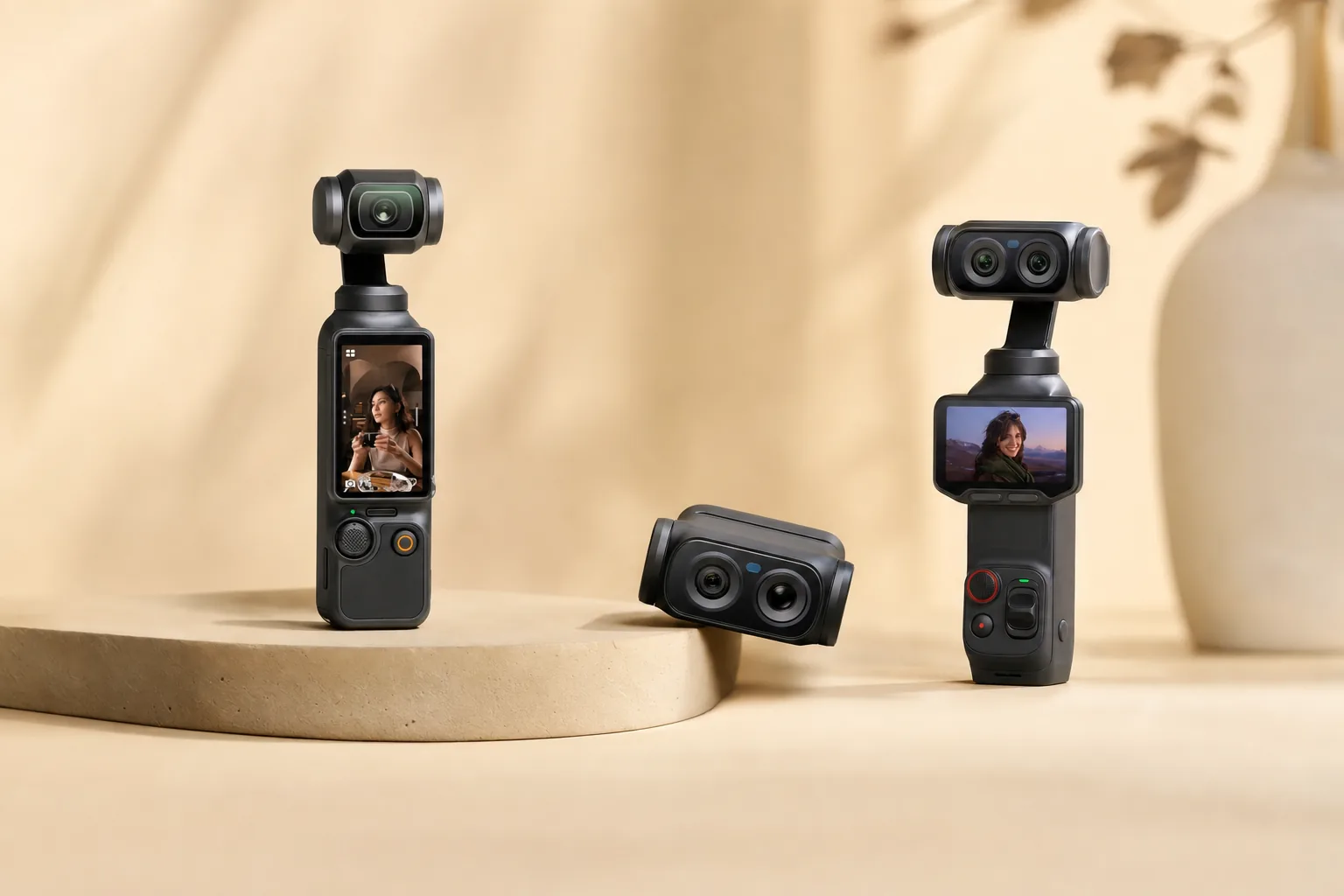 DJI Osmo Pocket 3 Alternatives Worth Considering Love the idea of a tiny stabilized vlog camera but want something smaller, cheaper, more flexible, or a step up? Here are the strongest DJI Osmo Pocket 3 alternatives, sorted by what you actually want instead. Read →
 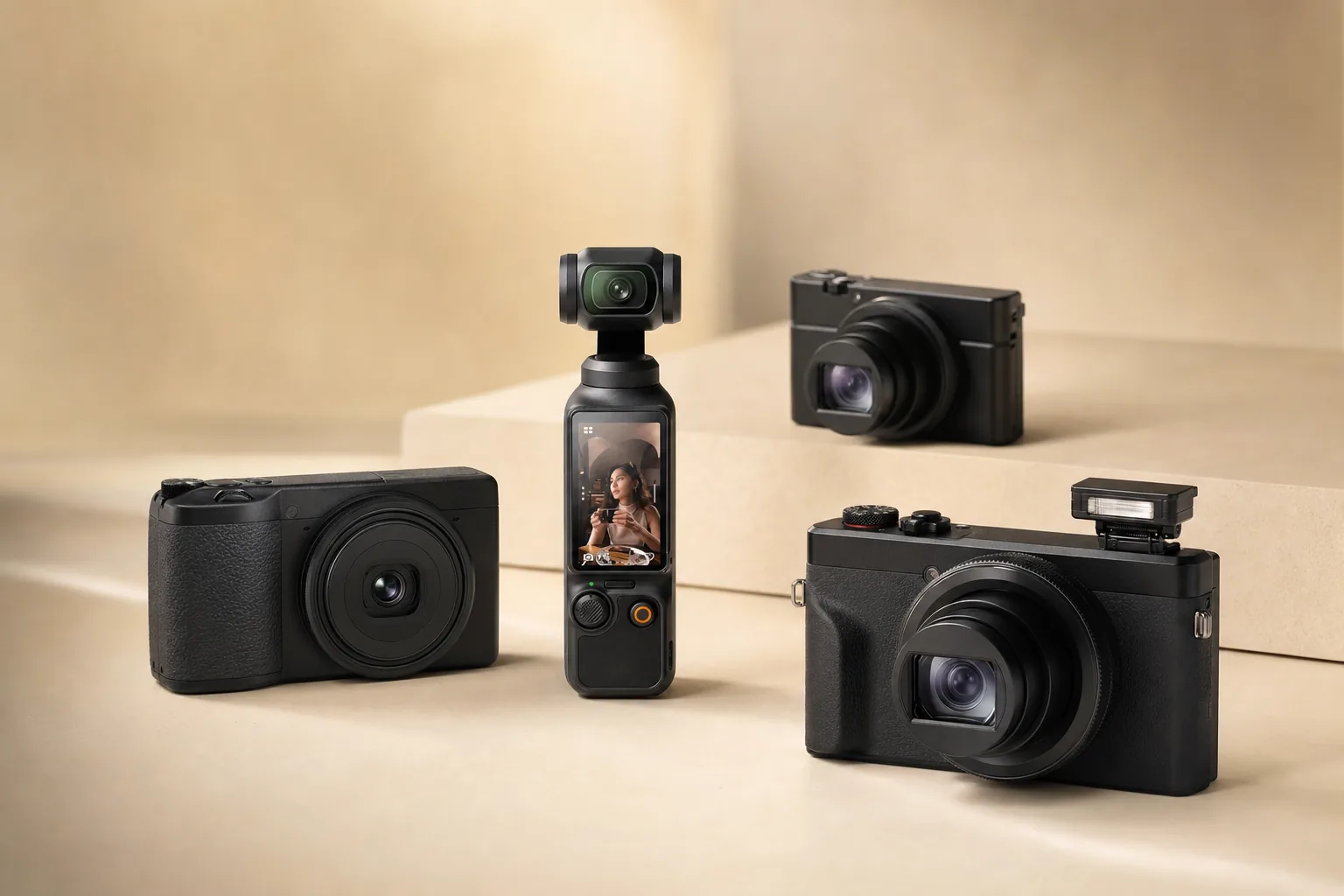 The Best Pocket Camera for Everyday Carry From stabilized vlog gimbals to fixed-lens compacts that fit in a pocket, here's how to pick the best pocket camera for the way you actually shoot. Read →
 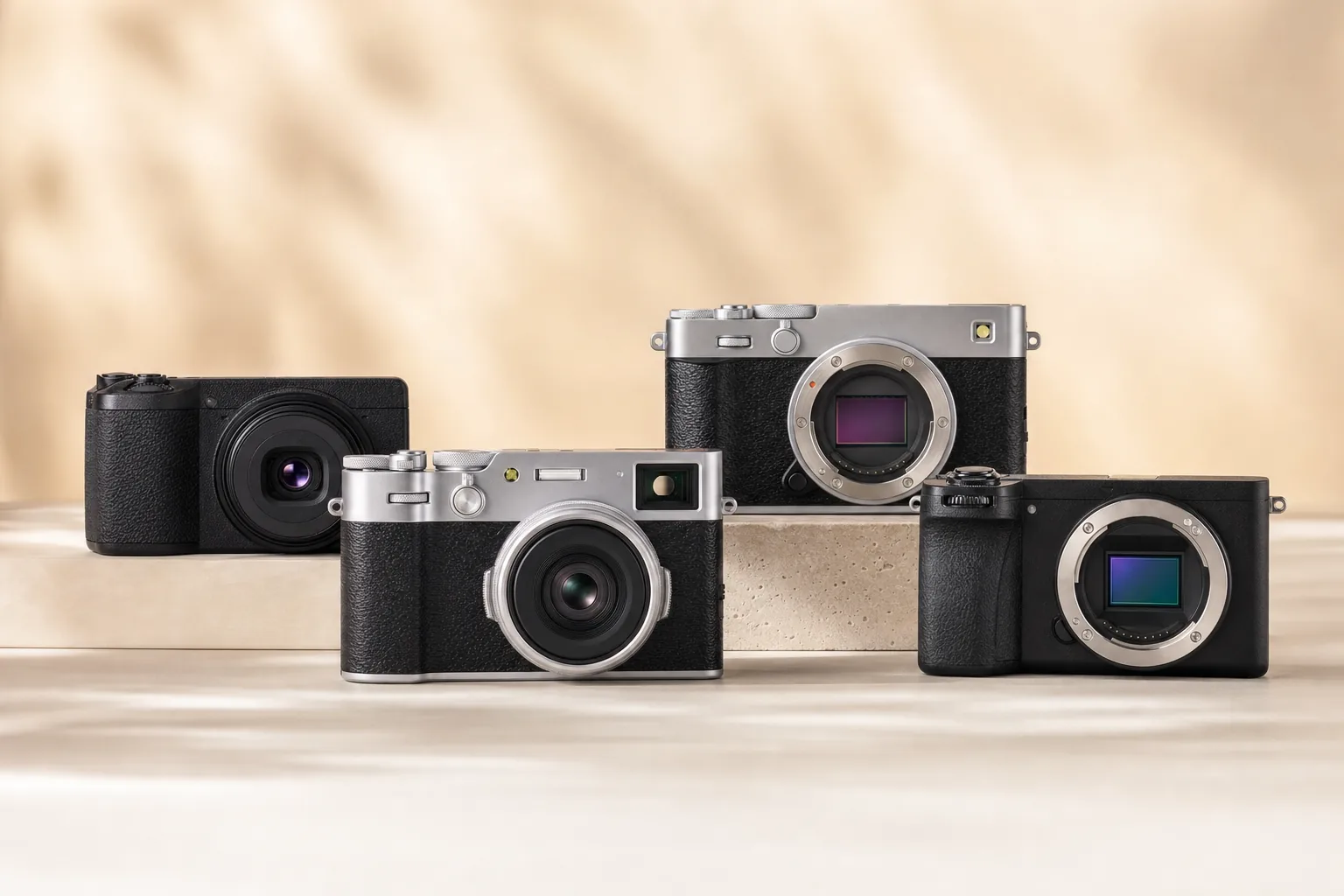 The Best Camera for Street Photography Discreet, fast, and pocketable beats big and obvious on the street. Here are the best cameras for street photography, from a true coat-pocket classic to versatile interchangeable-lens options. Read →
 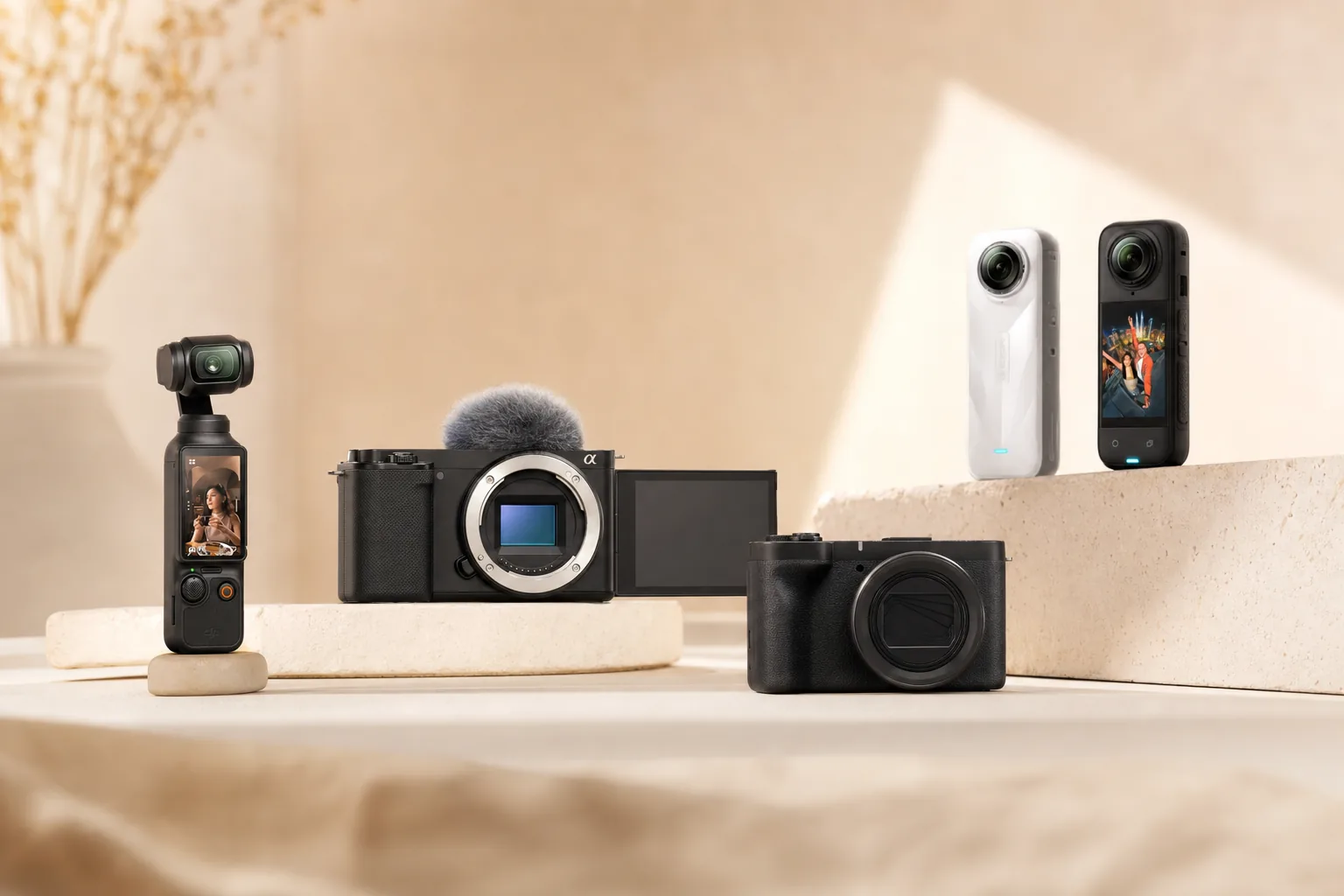 The Best Camera for Travel Vlogging Small enough to carry everywhere, stable enough to walk and talk, with good audio and a flip screen — here are the best cameras for travel vlogging, sorted by how you like to shoot. Read →
 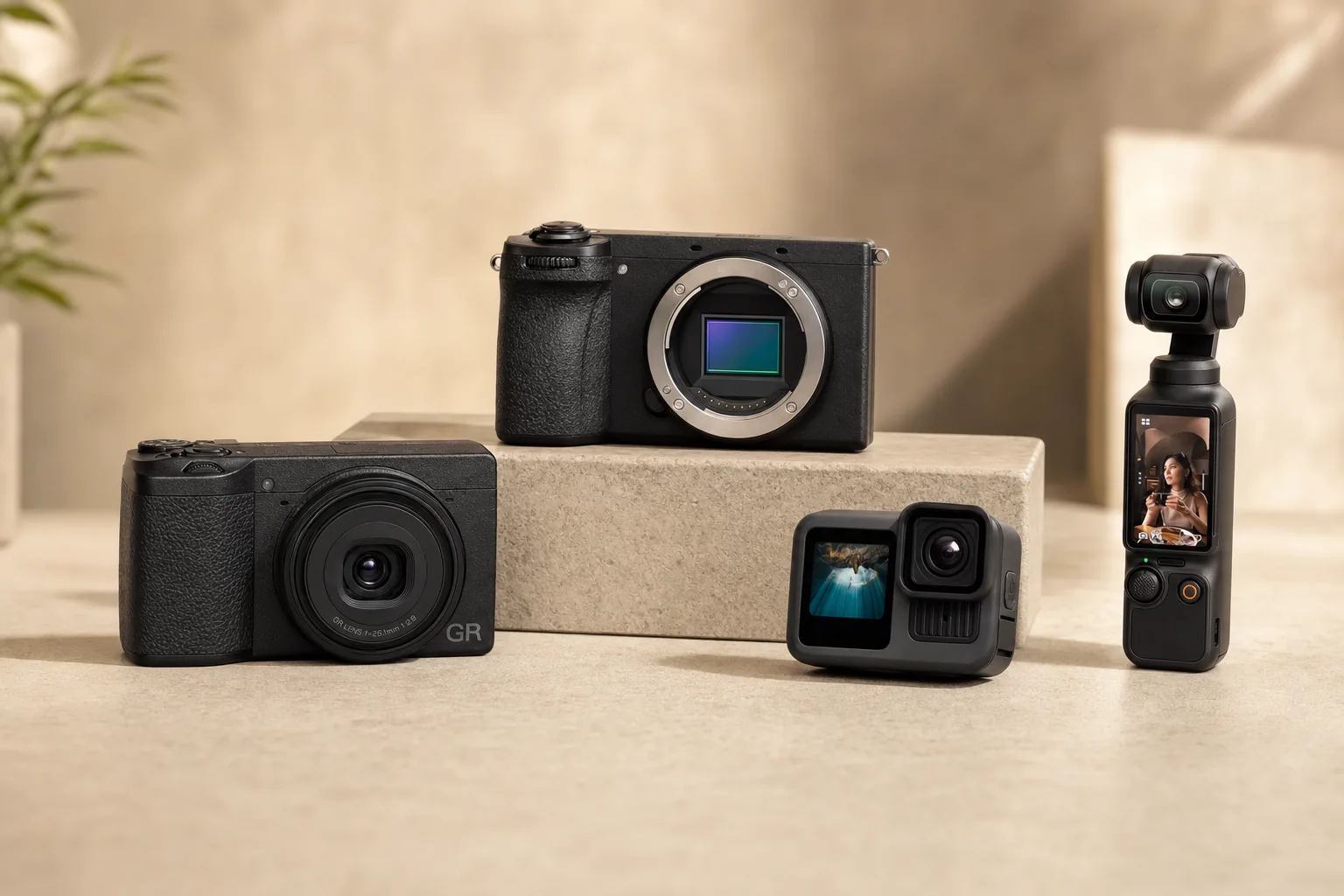 How We Test and Rank Cameras An honest look at our methodology: we don't run a lab. We research specs, track live prices, compare cameras fairly, and refuse to show listings we can't trust. Read →
 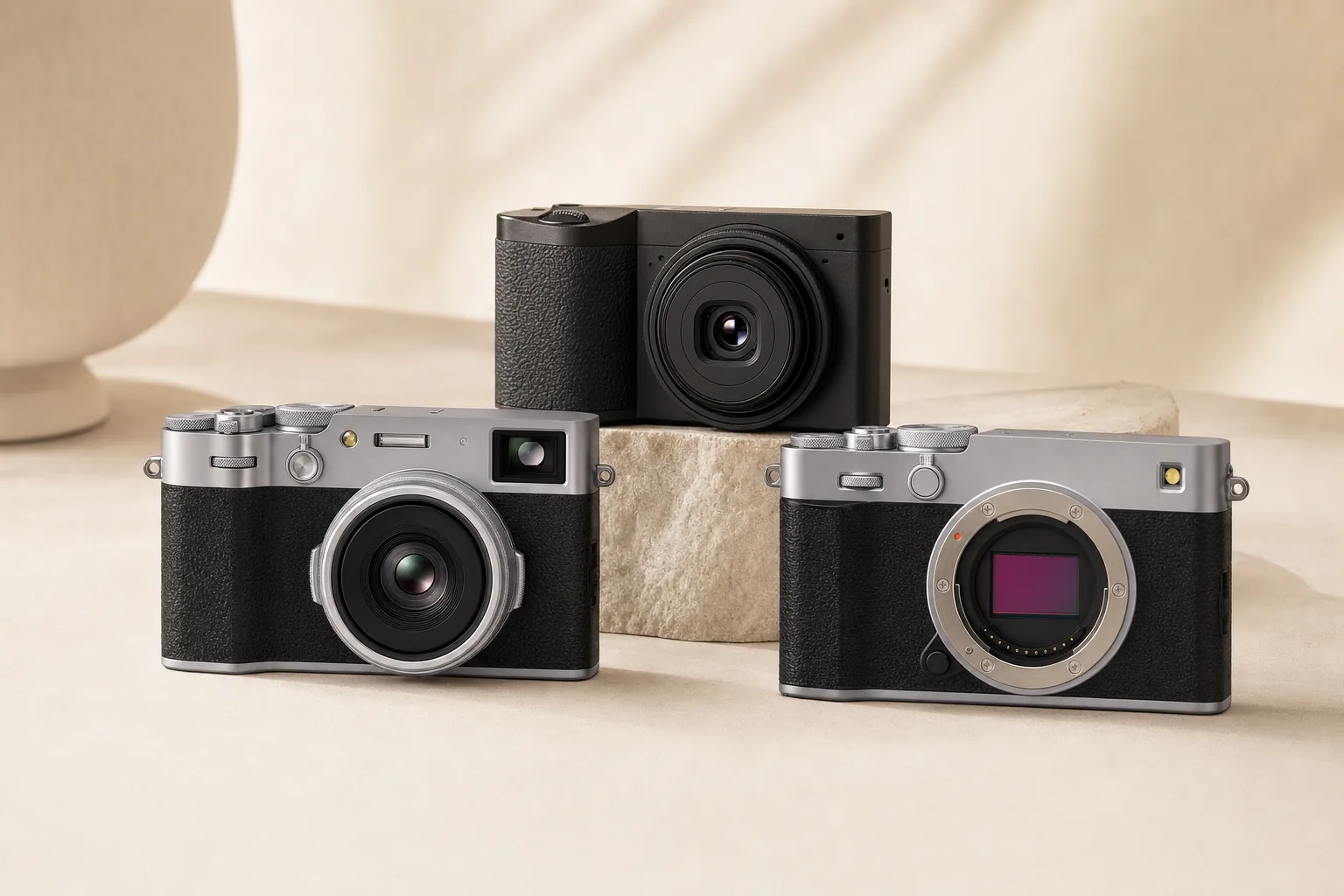 Is the Fujifilm X100VI Worth the Inflated Price? The X100VI is a brilliant compact stuck in a frustrating market: backordered and often selling well above MSRP. Here's an honest take on whether the markup is worth it, plus in-stock alternatives. Read →
 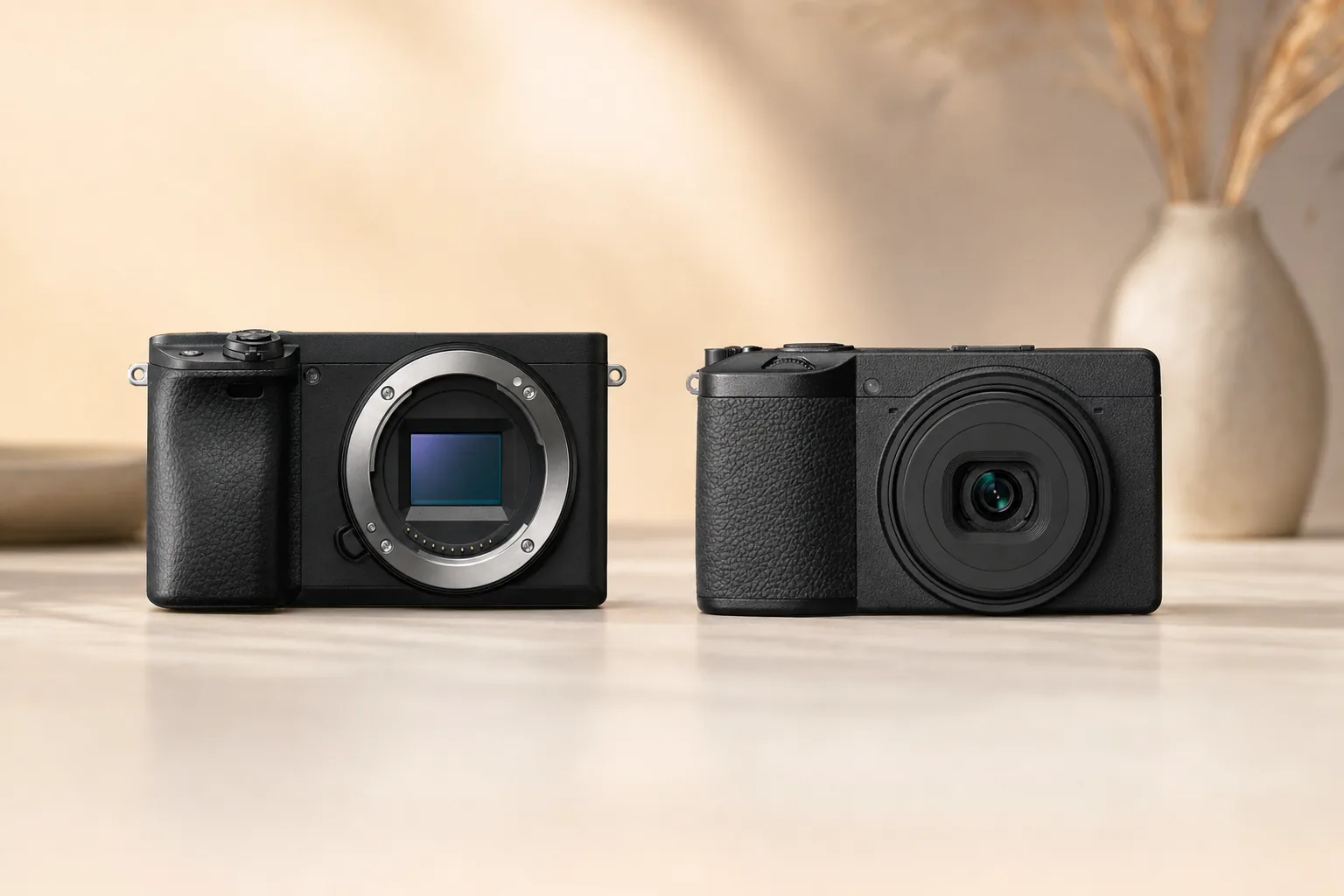 New vs Used Cameras: What to Know Before You Buy Used cameras can save you hundreds, but only if you know what to check. Shutter count, warranty, gray-market risk, and where buying used genuinely makes sense. Read →
 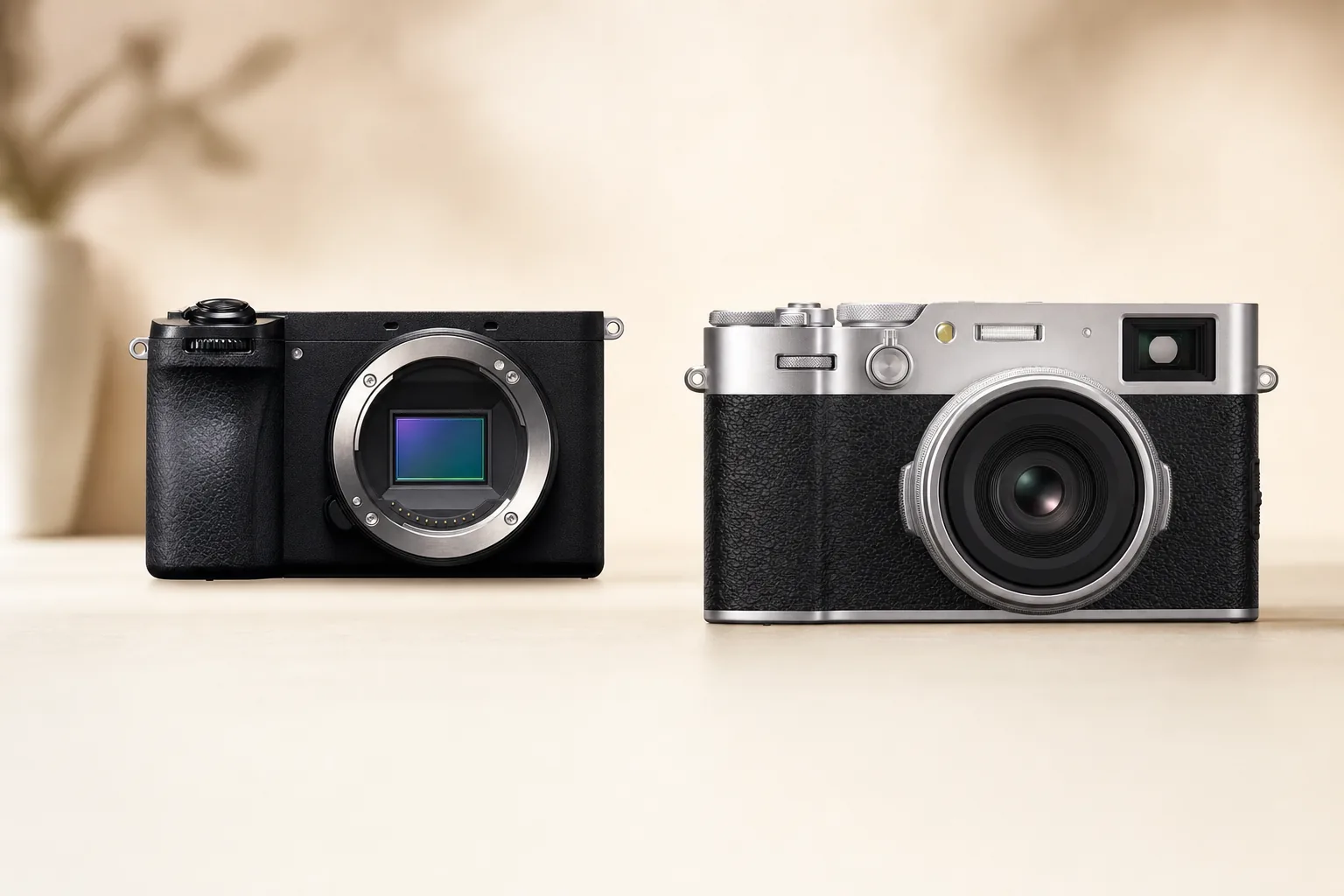 How Our Live Camera Prices Work Where our prices come from, how often they refresh, why Amazon shows a check-link instead of a number, and how we suppress listings we can't trust. Read →
 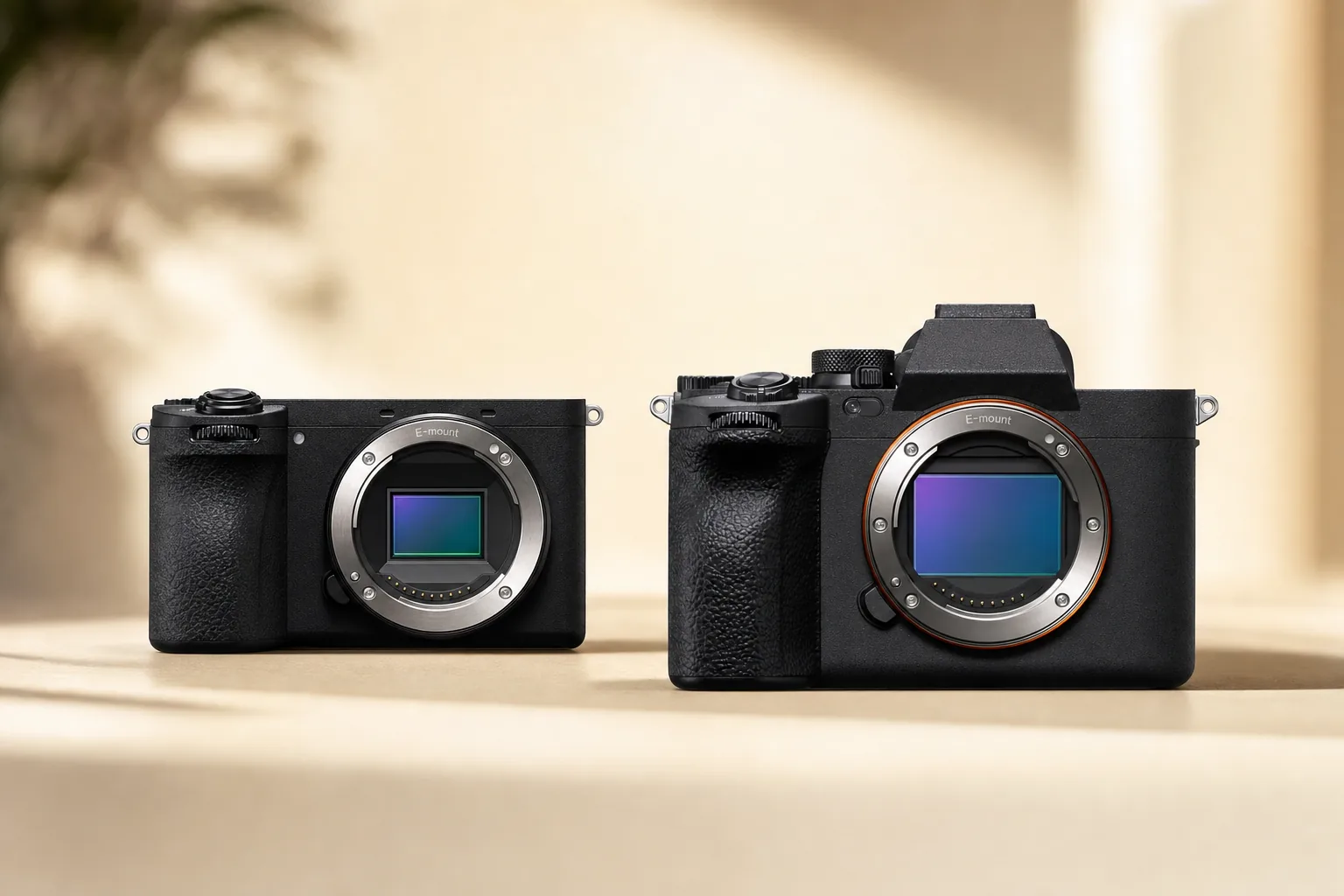 APS-C vs Full Frame: Which Sensor Do You Actually Need? The full-frame upgrade is real but smaller than the internet makes it sound. Here is the plain-English breakdown of what changes, what it costs, and who actually benefits. Read →
 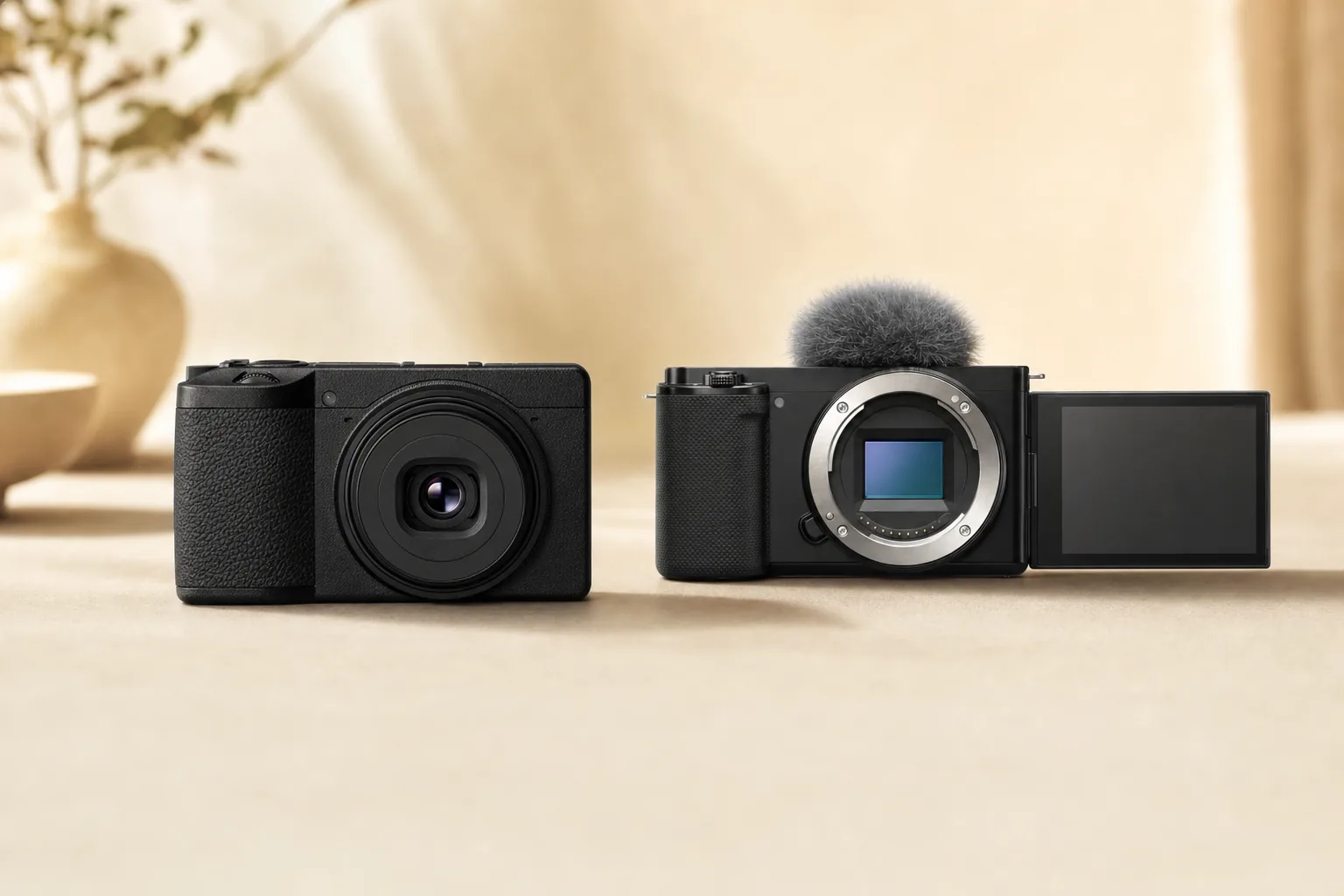 Point-and-Shoot vs Mirrorless: Which Is Right for You? One trades flexibility for grab-and-go simplicity; the other trades simplicity for room to grow. Here is how to tell which trade fits your life. Read →
 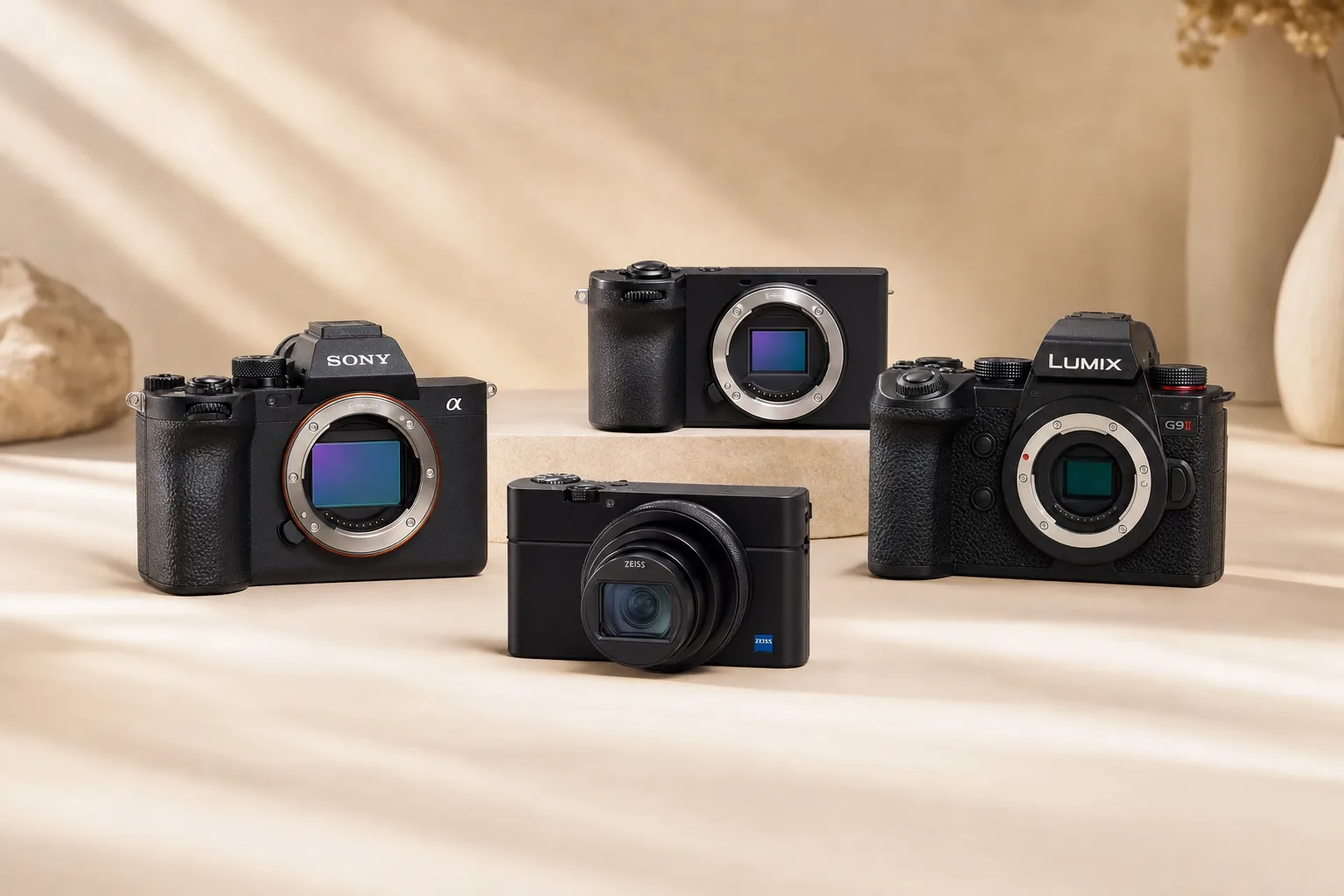 Camera Sensor Sizes Explained: Full Frame, APS-C, Micro 4/3 and 1-Inch The sensor is the single most important spec in any camera, and the one most buyers misunderstand. Here is what each size actually changes for you. Read →
 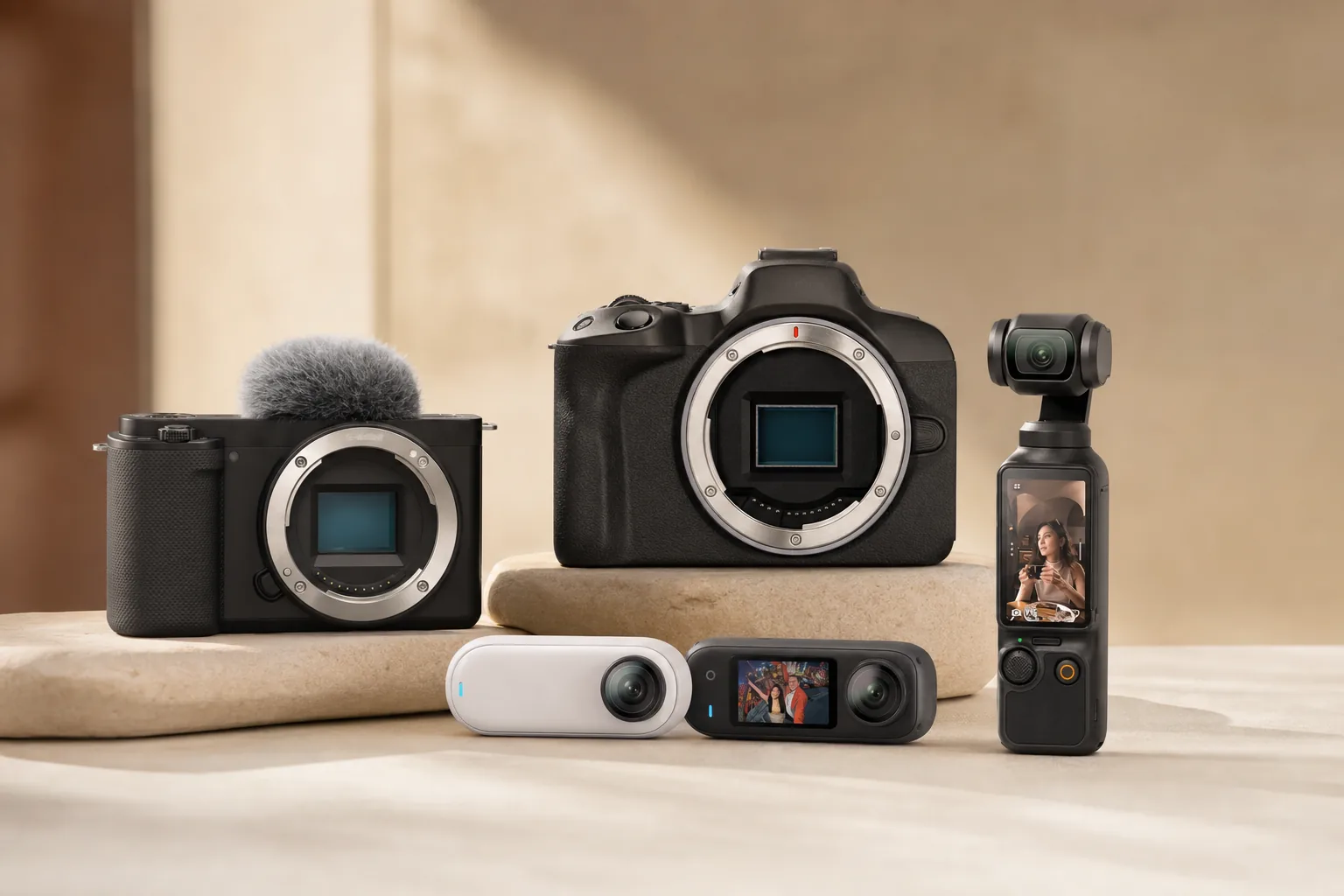 The Best Vlogging Camera for Every Budget From a pocket gimbal that never needs a tripod to a full interchangeable-lens setup, here is the right vlogging camera for each budget and style. Read →
Insta360 Luna Ultra vs DJI Osmo Pocket 3: Which Pocket Gimbal Wins? A practical comparison of the new 8K Leica-tuned Insta360 Luna Ultra against the proven 1-inch DJI Osmo Pocket 3, covering price, image quality, and who each one is for. Read → The Best Camera for Beginners in 2026: Honest Picks & Real Prices You want a first camera that won't leave you confused or overpaying. Here are the models that deliver the best balance of image quality, autofocus, and value — backed by live price tracking across every major retailer. Read → Insta360 vs GoPro: Which Action Camera Should You Buy? A buyer's guide to choosing between Insta360's flexible 360 and flat action cameras and GoPro's traditional rugged flat-lens action cams. Read → DJI Osmo Pocket 3 vs Pocket 4: Should You Upgrade? A clear-eyed look at whether the newer DJI Osmo Pocket 4 is worth it over the proven Pocket 3, focused on the upgrade decision and price. Read → GoPro Hero 13 vs DJI Osmo Action 6: Action Cam Face-Off A head-to-head comparison of the GoPro Hero 13 Black and DJI Osmo Action 6 flat action cameras, covering price, ecosystem, and who each one fits. Read → Sony ZV-E10 vs ZV-E10 II: Is the Upgrade Worth It? Both are APS-C vlogging mirrorless cameras, but the ZV-E10 II adds a newer sensor and better autofocus. Here's whether the price jump is worth it. Read → Fujifilm X100VI vs Ricoh GR IIIx: Premium Compact Showdown Two of the most loved APS-C premium compacts, compared on size, focal length, viewfinder, and price so you can pick the right pocket camera. Read → Canon R50 vs Sony ZV-E10: Best Entry Mirrorless for Creators Two budget APS-C mirrorless cameras aimed at new creators. The R50 leans photo-and-hybrid with a viewfinder; the ZV-E10 is built for vlogging. Read → Fujifilm X100VI Alternatives You Can Actually Buy Right Now The X100VI is perpetually backordered. Here are in-stock alternatives, from the pocketable Ricoh GR IIIx to the Fujifilm X-E5, that deliver a similar experience. Read → DJI Osmo Pocket 3 Alternatives Worth Considering Love the idea of a tiny stabilized vlog camera but want something smaller, cheaper, more flexible, or a step up? Here are the strongest DJI Osmo Pocket 3 alternatives, sorted by what you actually want instead. Read → The Best Pocket Camera for Everyday Carry From stabilized vlog gimbals to fixed-lens compacts that fit in a pocket, here's how to pick the best pocket camera for the way you actually shoot. Read → The Best Camera for Street Photography Discreet, fast, and pocketable beats big and obvious on the street. Here are the best cameras for street photography, from a true coat-pocket classic to versatile interchangeable-lens options. Read → The Best Camera for Travel Vlogging Small enough to carry everywhere, stable enough to walk and talk, with good audio and a flip screen — here are the best cameras for travel vlogging, sorted by how you like to shoot. Read → How We Test and Rank Cameras An honest look at our methodology: we don't run a lab. We research specs, track live prices, compare cameras fairly, and refuse to show listings we can't trust. Read → Is the Fujifilm X100VI Worth the Inflated Price? The X100VI is a brilliant compact stuck in a frustrating market: backordered and often selling well above MSRP. Here's an honest take on whether the markup is worth it, plus in-stock alternatives. Read → New vs Used Cameras: What to Know Before You Buy Used cameras can save you hundreds, but only if you know what to check. Shutter count, warranty, gray-market risk, and where buying used genuinely makes sense. Read → How Our Live Camera Prices Work Where our prices come from, how often they refresh, why Amazon shows a check-link instead of a number, and how we suppress listings we can't trust. Read → APS-C vs Full Frame: Which Sensor Do You Actually Need? The full-frame upgrade is real but smaller than the internet makes it sound. Here is the plain-English breakdown of what changes, what it costs, and who actually benefits. Read → Point-and-Shoot vs Mirrorless: Which Is Right for You? One trades flexibility for grab-and-go simplicity; the other trades simplicity for room to grow. Here is how to tell which trade fits your life. Read → Camera Sensor Sizes Explained: Full Frame, APS-C, Micro 4/3 and 1-Inch The sensor is the single most important spec in any camera, and the one most buyers misunderstand. Here is what each size actually changes for you. Read → The Best Vlogging Camera for Every Budget From a pocket gimbal that never needs a tripod to a full interchangeable-lens setup, here is the right vlogging camera for each budget and style. Read →