Sony ZV-E10 vs ZV-E10 II: Is the Upgrade Worth It?
Both are APS-C vlogging mirrorless cameras, but the ZV-E10 II adds a newer sensor and better autofocus. Here's whether the price jump is worth it.
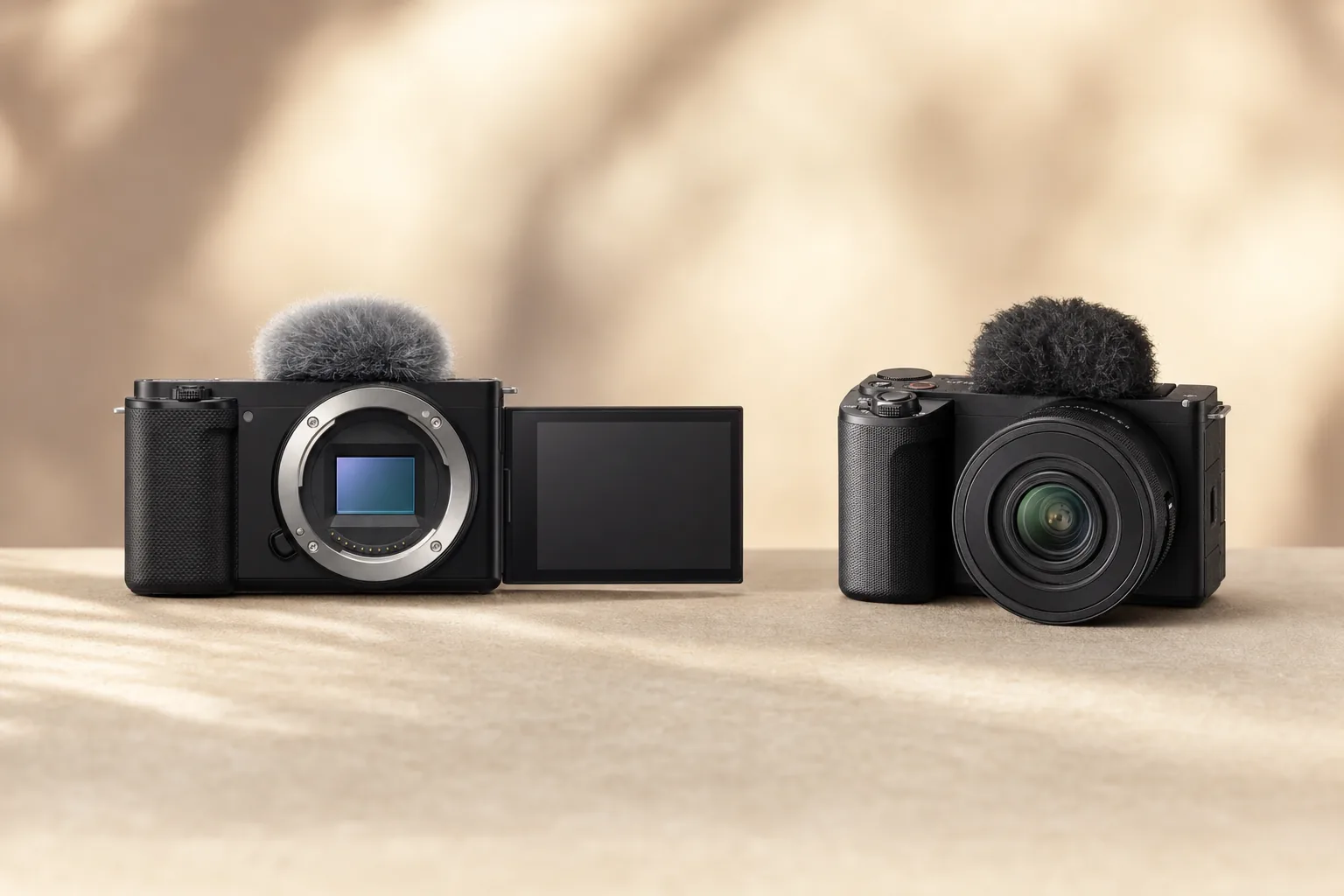
If you’re weighing the sony zv-e10 vs zv-e10 ii, the short answer is this: the ZV-E10 II is a genuine generational upgrade with a newer sensor, far better autofocus, uncropped 4K, 4K60, and a much bigger battery. But the original ZV-E10 is still a very capable vlogging camera that often sells for meaningfully less. Whether the upgrade is “worth it” comes down to how much you shoot video and how long you film between charges.
Both cameras share the same vlogger-first DNA: a flip-out selfie screen, a built-in directional mic, a dedicated Background Defocus and Product Showcase button, and Sony’s huge E-mount lens lineup. Neither has an electronic viewfinder. So this isn’t a redesign of the concept. It’s a serious internal refresh.
Sony ZV-E10 vs ZV-E10 II: spec comparison at a glance
| Spec | Sony ZV-E10 (original) | Sony ZV-E10 II |
|---|---|---|
| Sensor | 24.2MP APS-C Exmor CMOS | 26MP APS-C Exmor R BSI CMOS (same family as the a6700) |
| Processor | BIONZ X | BIONZ XR (newer, much faster) |
| Autofocus | 425 phase-detect points, Fast Hybrid AF | 759 phase-detect points (~92% coverage), AI subject-recognition AF |
| Max 4K video | 4K30 (incurs a crop, with notable rolling shutter) | 4K up to 30p oversampled from 6K (full width); 4K60 with a ~1.1x crop |
| Color depth | 8-bit | 10-bit 4:2:2 internal |
| Battery | NP-FW50, ~440 shots (CIPA) | NP-FZ100, ~610 shots (CIPA) |
| USB port | USB-C (USB 3.2 Gen 1) | USB-C (USB 3.2 Gen 1) |
| Rear screen | 3.0” ~921k-dot vari-angle touchscreen | 3.0” ~1.04M-dot vari-angle touchscreen |
| Viewfinder | None | None |
| Microphone | Built-in 3-capsule directional | Built-in 3-capsule directional |
| Weight (with battery + card) | ~343g | ~377g |
| Lens mount | Sony E | Sony E |
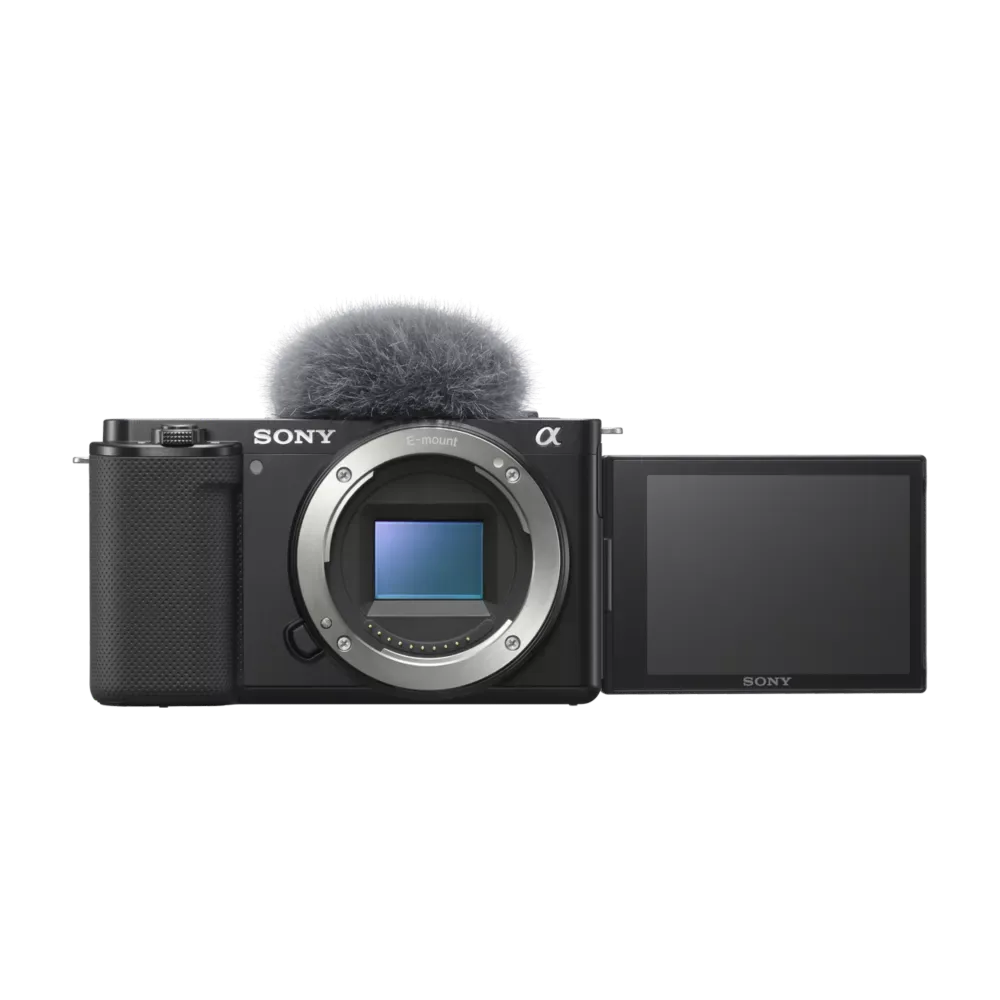 Sony · APS-C · MirrorlessSony ZV-E10from $586See price comparison →
In our catalog
Sony · APS-C · MirrorlessSony ZV-E10from $586See price comparison →
In our catalog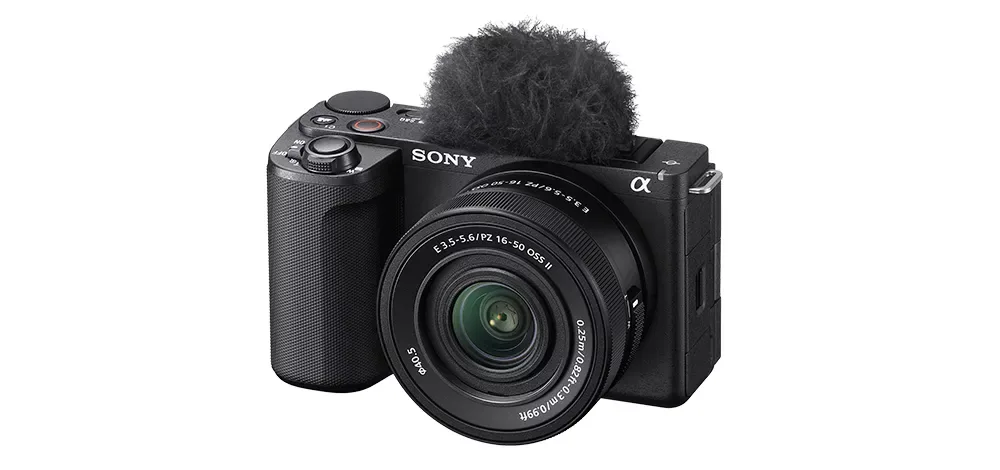 Sony · APS-C · MirrorlessSony ZV-E10 II$1,200See price comparison →
What the ZV-E10 II actually upgrades
Four changes carry almost all the value, and they’re the reason the II commands a higher price.
A newer, faster sensor. The II moves to a 26MP back-side-illuminated (BSI) sensor, the same generation found in Sony’s well-regarded a6700, replacing the original’s older 24MP design. The bump from 24 to 26 megapixels is minor on its own. What matters is the readout speed: the new sensor is far quicker, which is what unlocks better video and cleaner autofocus.
Autofocus that’s genuinely a generation ahead. The original’s 425-point Fast Hybrid AF is good, but the II’s 759-point system with AI-based subject recognition is the same modern approach Sony uses across its current lineup. For a camera people point at their own face, more reliable, sticky eye-tracking is a real day-to-day improvement.
Uncropped 4K plus 4K60. This is the headline. The original ZV-E10 has to crop in to shoot 4K30, and it shows significant rolling shutter (the “jello” wobble) in its 4K modes. The II shoots 4K up to 30p oversampled from a 6K readout using the full sensor width, and adds 4K60 (with a modest ~1.1x crop) for smoother motion and slow-motion. It also records 10-bit 4:2:2 internally, which gives you far more flexibility for color grading than the original’s 8-bit files.
A much bigger battery and modern handling. The II swaps the small NP-FW50 (~440 shots) for the larger NP-FZ100 (~610 shots), the same battery Sony’s higher-end bodies use. If you film long takes or a full day of B-roll, this alone can justify the upgrade. The II also adds a deeper grip and a UHS-II card slot.
One myth worth clearing up: both cameras already use USB-C, so that’s not a reason to upgrade, despite what some comparisons claim.
Is it worth the premium? If you shoot a lot of video, especially long-form, fast-moving, or anything you plan to color grade, yes. The battery, autofocus, and uncropped/10-bit 4K are tangible, everyday wins. If you mostly shoot stills or short clips, the gap narrows quickly.
What the original ZV-E10 still offers
Don’t write off the original. It remains a legitimately good vlogging camera, and it’s usually the smarter buy for tighter budgets.
It has the same flip-out screen, the same built-in directional 3-capsule mic, the same Sony E-mount (so every lens that fits the II fits the original), and the same beginner-friendly one-touch bokeh and product-showcase features. Its 24MP photos are excellent, and 4K30, crop and all, is perfectly usable for talking-head vlogs, social clips, and B-roll where you’re not whip-panning. It’s also lighter, at roughly 343g.
When the original sells for a few hundred dollars less than the II, that saved money can go toward a better lens, a microphone, or lighting, upgrades that often improve your footage more than the body swap would.
Who should buy which
Buy the Sony ZV-E10 II if you’re a serious or full-time content creator, you shoot a lot of 4K, you want 4K60 and 10-bit for editing headroom, you rely on autofocus tracking your face, or you film long enough that the NP-FZ100 battery genuinely matters.
Buy the original Sony ZV-E10 if you’re starting out, you’re price-sensitive, you shoot mostly stills and short clips, and you’d rather put the savings toward a lens or audio. It does the core vlogging job well and shares the same lens ecosystem you can carry forward.
Bottom line
The ZV-E10 II is the better camera, full stop: newer sensor, modern AF, uncropped and 4K60 10-bit video, and a far bigger battery. Those are real, verifiable upgrades, not marketing gloss. But “better” and “worth it for you” aren’t the same thing. Heavy video shooters should spend up for the II. Beginners and budget buyers will be perfectly happy with the original, especially with the price gap factored in. Either way, you’re buying into the same flip-screen, E-mount vlogging platform. You’re just choosing how much performance you need today.
Find the camera worth buying
We compare live listed prices and link you straight to the lowest one. No fake discounts.