What Camera Should I Buy as a Beginner for Photography and Video? (2026)
You want one camera that does both well. Here’s the honest answer, with real prices and no hype.
You want one camera that shoots great photos and solid video, without a huge learning curve or a huge bill. That’s the right ask. The good news: in 2026, the entry-level mirrorless market is stacked with hybrid bodies that nail both. The bad news: you’ll hear plenty of marketing hype about full-frame being a must-have. The truth: you don’t need it.
Here’s our honest bottom line: for most beginners, an APS-C mirrorless camera in the $700-$1,000 range with a kit lens is a practical and versatile starting point. It gives you interchangeable lenses, reliable autofocus, 4K video, and room to grow, without the bulk or cost of full-frame. We track live prices across retailers, so you can check current listings for the best street price.
The Best Beginner Hybrid: Canon EOS R50
In our catalog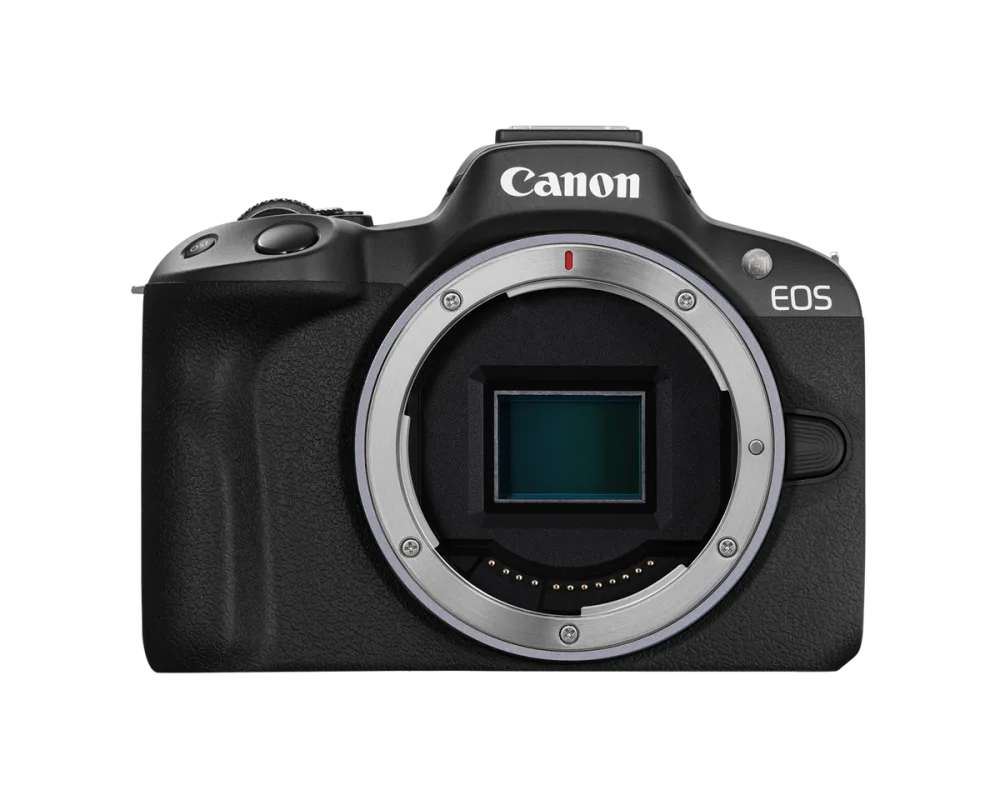 Canon · APS-C · MirrorlessCanon EOS R50from $650See price comparison →
If you want one camera that does both photography and video well, the Canon EOS R50 is one of our top picks for beginners. It’s compact, has a fully articulating touchscreen that flips out for vlogging, and Canon’s guided menu system walks you through settings as you learn. The 24MP APS-C sensor delivers high-quality stills, and the 4K video is clean and well-suited for YouTube and social. Autofocus is Canon’s Dual Pixel system with subject detection for people and animals, which means you can set it and trust it. No IBIS, so use a stabilized kit lens or a gimbal for handheld video. Street prices vary by retailer and bundle, so compare current listings before you buy.
Best Budget Hybrid: Canon EOS R10
In our catalog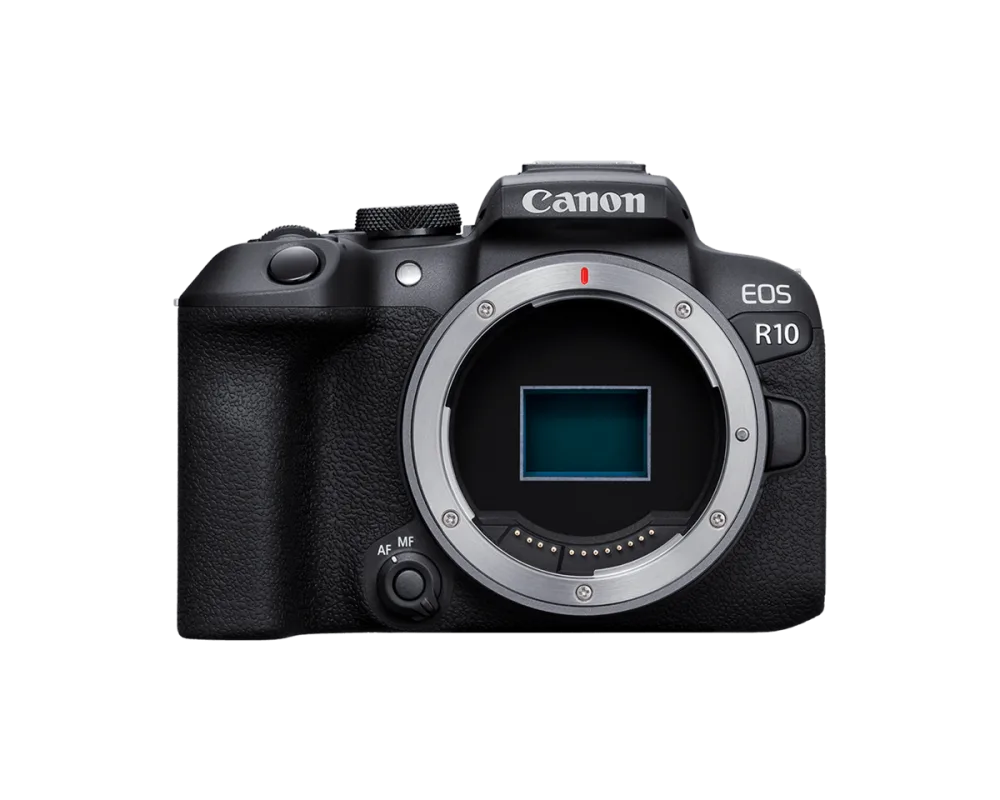 Canon · APS-C · MirrorlessCanon EOS R10from $868See price comparison →
If the R50 stretches your budget, the Canon EOS R10 is the value pick. It shares the same 24MP APS-C sensor and Dual Pixel AF, but adds more physical controls for a more hands-on feel, nice if you plan to grow. Video includes 4K 30p and 4K 60p (with a crop), and the screen is fully articulating. No IBIS, so consider a stabilized lens or gimbal for smoother handheld video. Check current listings for the street price; it typically costs a bit more than the R50, but you get a more hands-on body with additional controls.
Best for Video-First Beginners: Sony ZV-E10 II
In our catalog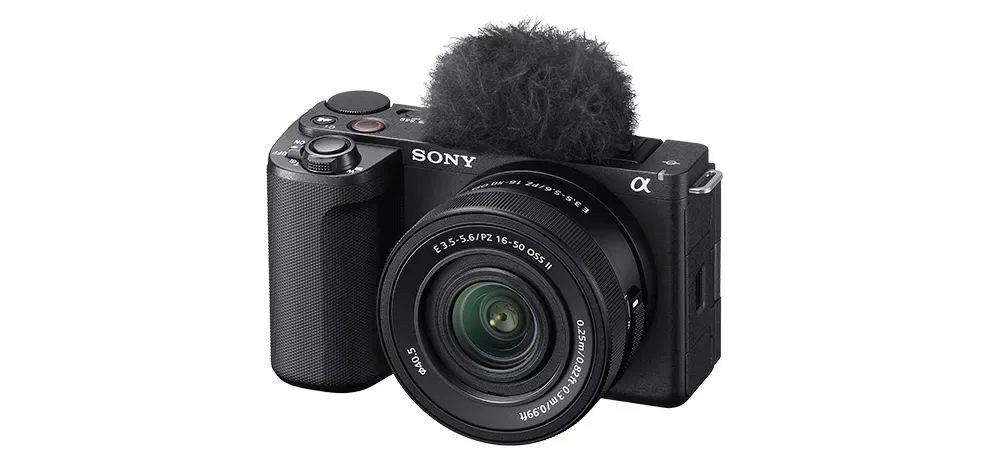 Sony · APS-C · MirrorlessSony ZV-E10 II$1,200See price comparison →
If video is your priority but you still want photo capability, the Sony ZV-E10 II is a strong choice. It’s a 26MP APS-C body with a fully articulating screen, a built-in three-capsule mic, and Sony’s excellent autofocus with real-time tracking for humans and animals. 4K 60p is available (with a 1.1x crop), plus log profiles if you want to color grade later. No viewfinder, so it’s less ideal for bright-light photography, and there’s no IBIS, but it does offer electronic stabilization for video, so a gimbal helps for walking shots. Check current listings for the street price with kit lens; prices vary by retailer.
Best for Photo-First Beginners: Nikon Z50 II
In our catalog Nikon · APS-C · MirrorlessNikon Z50 IIfrom $890See price comparison →
If you lean more toward photography but want 4K video as a bonus, the Nikon Z50 II is our pick. It’s a 20.9MP APS-C body with a bright electronic viewfinder, a 3.2-inch fully articulating touchscreen, and Nikon’s solid autofocus. The kit lens performs well, and the body feels great in hand. It handles 4K video well, including 4K 60p with a crop, and there’s no IBIS, but the kit lens has stabilization. Check current listings for the street price and available deals.
The Honest Tradeoffs
Here’s what you give up at this price: no in-body stabilization (IBIS) on most of these, so handheld video will have some shake; use a stabilized lens or a cheap gimbal. No weather sealing, so keep them dry. And kit lenses are slow (f/3.5-6.3), so low light will push ISO, but modern sensors handle it well.
What you get: interchangeable lenses, so you can add a fast prime like a 35mm f/1.8 for portraits and low light. A potential upgrade path: you can keep your lenses if you later move to a higher-end body in the same mount. And most importantly, a camera that’s easy to learn on, with auto modes that work while you grow.
Why Not Full-Frame?
Full-frame bodies like the Nikon Z5 II are tempting, and they can offer better low-light performance and shallower depth of field, though modern APS-C cameras have narrowed the gap. But they often cost more, and full-frame lenses tend to be larger and pricier. For many beginners, APS-C is a smart first step. You’ll learn the same skills, and you can upgrade later if you choose.
The Price Is the Price
Don’t pay for hype. We track live prices across Amazon, eBay, and direct from manufacturers, so you can check current street prices and spot a good deal. New isn’t necessary; last year’s model is often just as good for less. And remember: the best camera is the one you’ll actually carry. Start with a solid APS-C hybrid, learn it well, and you’ll be set for years.
Compare listed prices on the Canon R50 →
Compare prices on the Canon R10 →
Check the Sony ZV-E10 II →
Find the camera worth buying
We compare live listed prices and link you straight to the lowest one. No fake discounts.