Sony ZV-1 II vs ZV-E10
One fits a pocket and never changes lenses; the other takes Sony's E-mount range. Here is how to pick, and where the ZV-E10 II changes the answer.
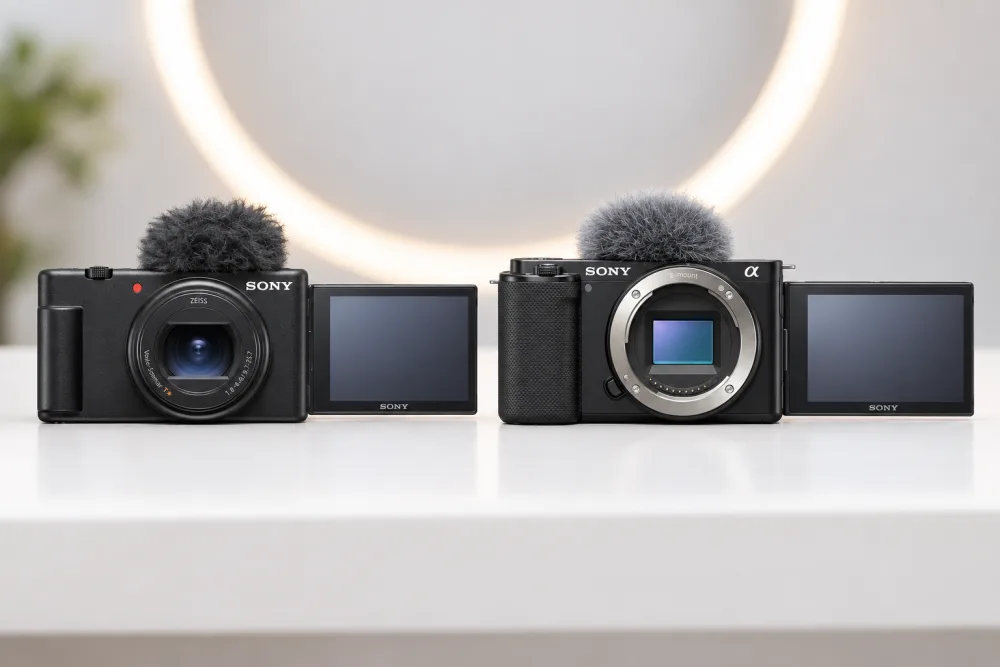
Sony ZV-1 II vs ZV-E10 is a choice between a pocketable 1-inch compact with a fixed wide lens and an APS-C body that takes Sony’s E-mount lenses. Buy the ZV-1 II if you want one small camera you never have to think about, and buy the ZV-E10 if you want better image quality and a system you will keep adding to.
In our catalog Sony · 1-inch · CompactSony ZV-1 IIfrom $697See price comparison →
In our catalog
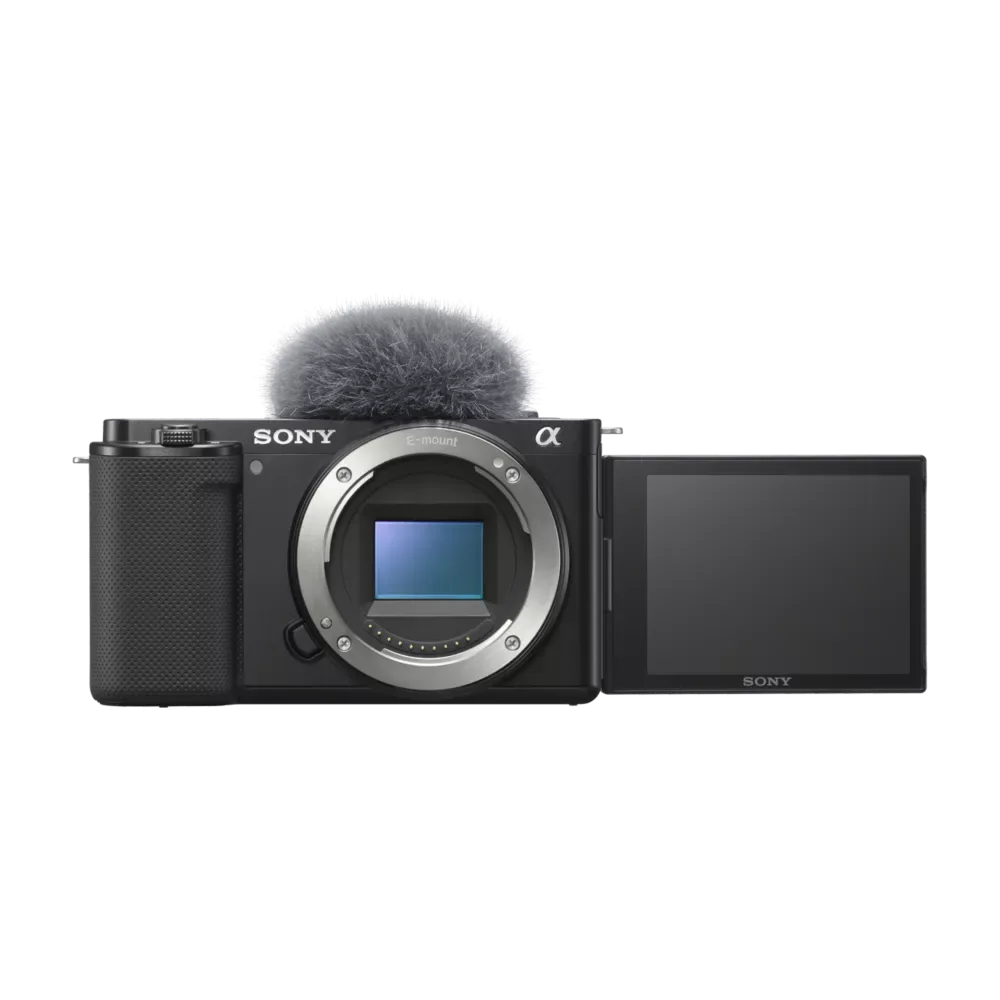 Sony · APS-C · MirrorlessSony ZV-E10from $586See price comparison →
1-inch fixed zoom vs APS-C with lenses
The ZV-1 II pairs a 20.1MP 1-inch sensor with a lens that starts at a wide 18mm equivalent, wide enough to hold the camera at arm’s length and fit your face and the room. The ZV-E10’s 24.2MP APS-C sensor is larger, and the lens is your choice, from the kit zoom to a fast prime for background blur.
Autofocus, Product Showcase and the bokeh switch
Both are built for talking to camera. The ZV-E10 has a Background Defocus button, Product Showcase mode, which pulls focus from your face to an object you hold up, and Real-time Eye AF. The ZV-1 II has Product Showcase too, with the same autofocus family as Sony’s RX100 series.
Battery, crop and recording limits
The ZV-E10 runs on the small NP-FW50 battery, rated around 440 shots, and its 4K30 mode crops the frame; it is uncropped only at 4K24. On a wide vlog shot that crop tightens your view, and the sensor shows rolling-shutter wobble when you pan in 4K.
The ZV-1 II records 4K through its fixed lens, so there is no lens swap to plan around.
Sony ZV-1 II vs ZV-E10 price today
The cards above show both live prices. The ZV-E10 kit usually sits below the ZV-1 II in our catalog, but add the cost of a lens you actually want before you compare.
Where the ZV-E10 II changes the answer
The ZV-E10 II fixes most of the original’s weak spots: a 26MP BSI sensor, uncropped 4K30 oversampled from 6K, 4K60 with a slight crop, 10-bit color and the larger NP-FZ100 battery. It costs more, and our ZV-E10 vs ZV-E10 II guide covers whether the upgrade pays for you.
Which one for a first vlog camera
Pick the ZV-1 II for travel vlogs, daily carry and anyone who will never buy a second lens. Pick the ZV-E10 for sit-down YouTube, product videos and a creator who wants background blur and room to grow; our best vlogging camera guide lists the alternatives.
Skip both if you mostly shoot stills. They are built around the flip screen, and a camera with a viewfinder, like the Canon R50 in our R50 vs ZV-E10 comparison, suits stills better.
Pocket simplicity or a lens system: settle that and the ZV-1 II vs ZV-E10 question answers itself at the live prices above.
Find the camera worth buying
We compare live listed prices and link you straight to the lowest one. No fake discounts.