Best Mirrorless Camera for Sports Photography
Sports asks three things of a camera: autofocus that tracks, a fast burst and a buffer that keeps up. Here is what each budget buys.

The best mirrorless camera for sports photography is one whose autofocus tracks a moving player, whose burst is fast enough to catch the peak moment, and whose buffer does not stall mid-play. For most people that is an APS-C body such as the Canon EOS R7 or Sony a6700, with the Nikon Z50 II as the entry option and the Nikon Z8 at the pro end.
What sports needs: AF tracking, burst, buffer
Autofocus consistency matters more than resolution: a body that locks on and holds, frame after frame, gives you more keepers than extra megapixels. After that comes a fast burst and a buffer deep enough that a sequence does not stop before the play does. Our wildlife camera guide sets the same bar for birds.
Under $1,000: APS-C bodies that track
The Nikon Z50 II brings subject-detection autofocus from Nikon’s Z8 to an entry body. The Canon EOS R10 shoots 15 fps with its mechanical shutter and adds a front dial, a joystick and a deeper grip, which is why we point sports and kids shooters to it.
In our catalog Nikon · APS-C · MirrorlessNikon Z50 IIfrom $890See price comparison →
Mid range: fast APS-C and full frame
The Canon EOS R7 pairs a 32.5MP APS-C sensor with a 30 fps electronic shutter and Canon’s subject detection. The Sony a6700 is the APS-C all-rounder, with AI-based subject recognition and in-body stabilization.
In our catalog Canon · APS-C · MirrorlessCanon EOS R7See priceSee price comparison →
In our catalog
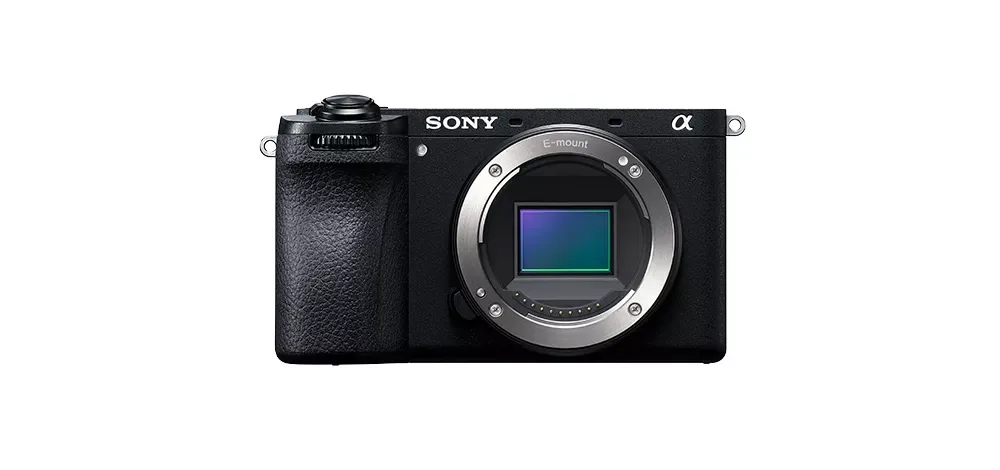 Sony · APS-C · MirrorlessSony a6700from $1,319See price comparison →
The Canon R6 Mark II is the full-frame option: 12 fps mechanical, up to 40 fps electronic, and autofocus rated for very dim scenes, which helps in gyms and at night games.
In our catalog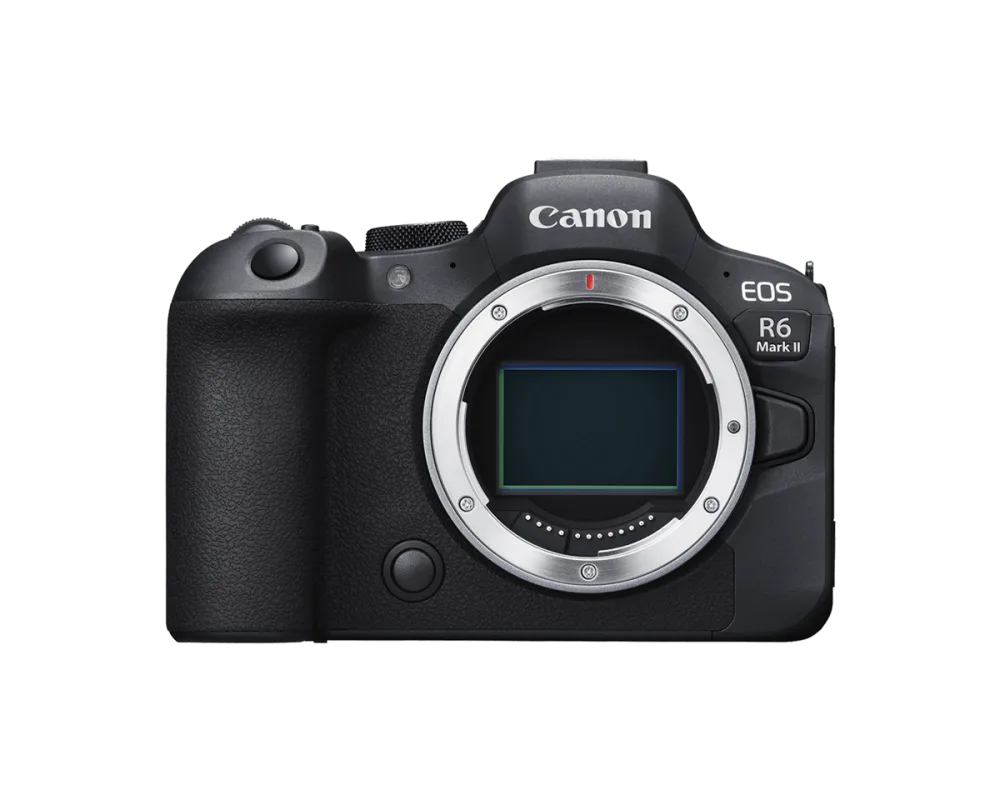 Canon · Full-frame · MirrorlessCanon EOS R6 Mark IIfrom $1,740See price comparison →
Flagships: global shutter and pro bodies
The Nikon Z8 pairs a 45.7MP full-frame sensor with 493 autofocus points and a 20 fps RAW burst in a sealed body. Above it, the Sony a9 III uses a global shutter that reads the whole sensor at once and shoots up to 120 fps, a specialist tool for pros who already own Sony glass.
In our catalog Nikon · Full-frame · MirrorlessNikon Z8from $3,023See price comparison →
Lens reach: why APS-C wins on a budget
A crop sensor gives any telephoto more effective reach, so an APS-C body fills the frame from the stands where full frame needs a longer and pricier lens. The OM System OM-1 Mark II takes this further with a 2x crop factor. Our APS-C vs full frame guide explains the math.
Skip this list if you shoot one youth game a month; an entry body with its kit zoom may be all you need, and our best mirrorless camera guide covers all-round bodies.
Tracking, burst and buffer decide a sports camera, and the live prices above show what each tier costs today.
Find the camera worth buying
We compare live listed prices and link you straight to the lowest one. No fake discounts.