Canon R8 vs R6 Mark II
Both bodies share one full-frame sensor. The money between them buys stabilization, a second card slot and a larger battery, and only some buyers need those.
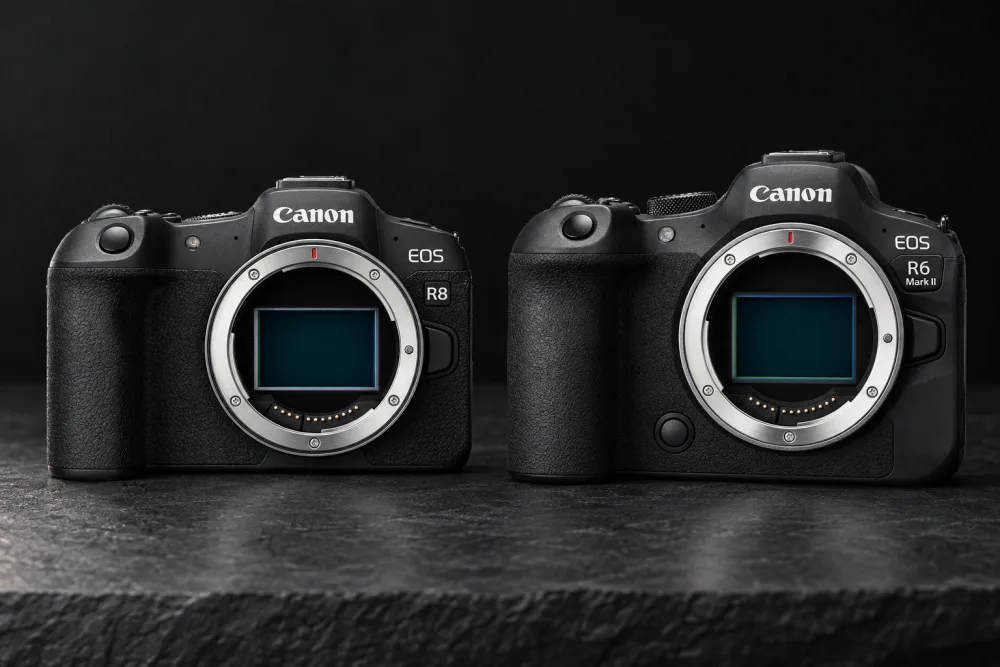
Canon R8 vs R6 Mark II comes down to the body around the sensor, because the R8 uses the same 24.2MP full-frame sensor and processor as the R6 Mark II. What the extra money buys is in-body stabilization, a second card slot, a larger battery and a 12 fps mechanical shutter, and whether you will use those decides the answer.
In our catalog Canon · Full-frame · MirrorlessCanon EOS R8from $1,200See price comparison →
In our catalog
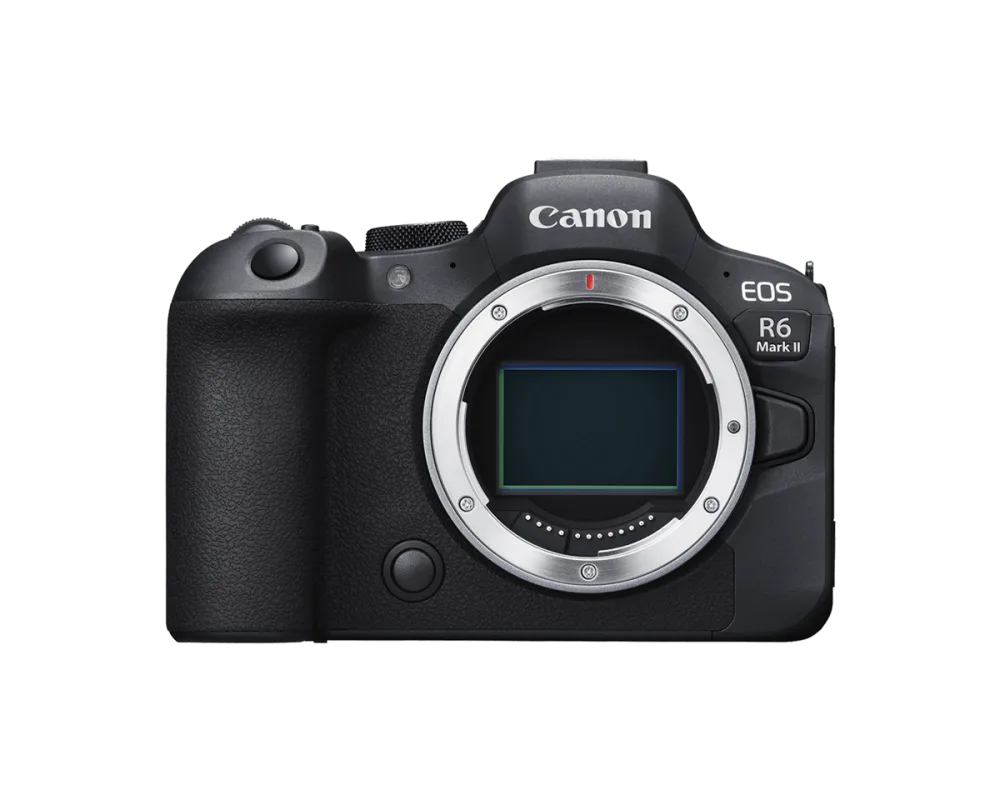 Canon · Full-frame · MirrorlessCanon EOS R6 Mark IIfrom $1,740See price comparison →
Same 24MP sensor, different bodies
Canon built the R8 by putting the R6 Mark II’s sensor and processor into a smaller, lighter body. Photos from the two start in the same place: the same resolution, the same high-ISO behavior, the same RF lenses in front.
That makes the R8 one of the more affordable ways into full frame in Canon’s RF system, and a regular in our entry-level full-frame guide.
What the R6 Mark II adds for the money
Stabilization is the big one. The R8 has no in-body stabilization, while the R6 Mark II carries a system rated at up to 8 stops, which matters for handheld video and for slow shutter speeds with unstabilized primes.
The R6 Mark II also records to two cards instead of one, uses a larger battery, and shoots 12 fps with the mechanical shutter or up to 40 fps electronic. The R8’s viewfinder is the more modest of the two.
Video: same sensor, different handling
The R6 Mark II records 4K60 oversampled from 6K with no crop. The R8 shares that sensor and processor, but its body limits how you use it: walking shots need a stabilized lens or a gimbal, and the smaller battery means more swaps on a long shoot.
Canon R8 vs R6 Mark II price today
The cards above carry both live prices. Treat the gap as lens money: an R8 with a good prime can do more for a stills shooter than an R6 Mark II with a kit zoom.
Which one to buy for photo, video or hybrid
Buy the R8 for travel, street and casual stills, or when full frame is the goal and the budget is fixed. Buy the R6 Mark II for handheld video, for weddings and events where a backup card matters, or for action where the mechanical burst helps.
Hybrid shooters who film more than they expect should lean toward the R6 Mark II, because in-body stabilization is the one thing you cannot add later.
Skip both if you mostly shoot sports or wildlife on a budget; an APS-C body gives a telephoto more reach, as our APS-C vs full frame guide explains. First-time buyers should also read Canon R10 vs R50 before paying for full frame.
One sensor, two bodies: pay for the Mark II only when stabilization, the second slot or the battery will earn it back.
Find the camera worth buying
We compare live listed prices and link you straight to the lowest one. No fake discounts.