Entry-Level Full-Frame Mirrorless Cameras in 2026: What to Buy and What to Skip
Full frame doesn't have to mean flagship money. Here's how we'd think about the entry-level full-frame market in 2026: the real street prices, the honest tradeoffs, and where the value actually sits.
You want full frame. You don’t want to spend $3,000 to get it. That’s the whole question, and it’s a reasonable one. The entry-level full-frame mirrorless segment exists precisely for buyers who’ve decided APS-C isn’t enough and flagship bodies are overkill.
The honest bottom line: full frame is more accessible than it’s ever been, but “entry level” still means real money. Currently, the credible entry full-frame bodies sit roughly in the $1,300 to $2,000 band depending on body-only versus kit and whatever promotion is running that week. Below that, you’re usually looking at APS-C or a used body, and both are legitimate answers.
A strong pick for many buyers
In our catalog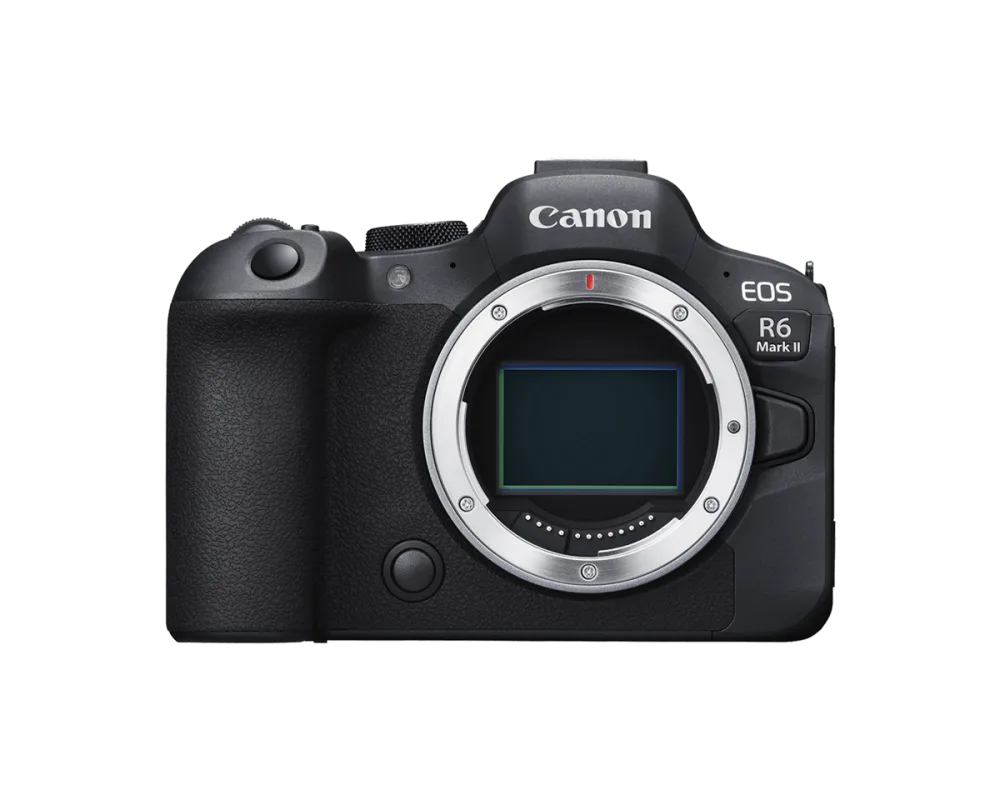 Canon · Full-frame · MirrorlessCanon EOS R6 Mark IIfrom $1,740See price comparison →
The R6 Mark II is a camera we’d point many entry full-frame buyers toward, and it’s a deliberate call. It’s not the cheapest body in the segment, but it’s the one that stops you from re-shopping in eighteen months. Full-frame sensor, a body that balances well with real lenses, and a feature set that doesn’t feel like a compromise every time you pick it up. Pricing puts it above the strict entry tier, so if your ceiling is firm, read on.
Our value pick
In our catalog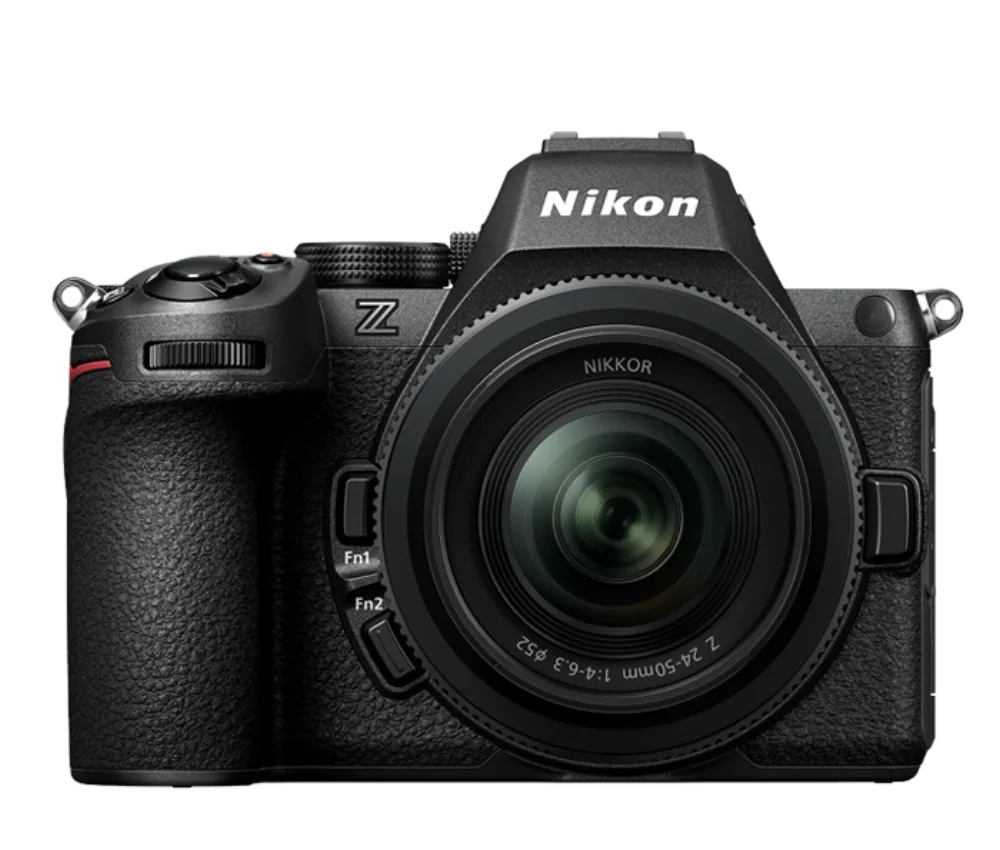 Nikon · Full-frame · MirrorlessNikon Z5 IIfrom $1,500See price comparison →
If you want full frame without paying full-frame-flagship money, the Z5 II is where we’d start. It sits in genuinely entry-level territory for a current full-frame body, and it’s the pick we’d hand to someone who wants the format without the sticker shock. The tradeoff is that you’re buying into Nikon’s Z lens ecosystem rather than Canon RF or Sony E, worth thinking about before you commit, because lenses outlive bodies.
If you want the cheapest on-ramp
In our catalog Canon · Full-frame · MirrorlessCanon EOS R8from $1,200See price comparison →
The R8 is one of the more affordable ways into full frame in Canon’s RF system. It’s the pick for buyers whose budget is the binding constraint and who are willing to accept the compromises that come with it: no in-body stabilization, a single card slot, and a more modest viewfinder than higher tiers. Whether those matter depends entirely on what you shoot. For tripod work and casual stills, they often don’t.
If a smaller body matters more than price
In our catalog Sony · Full-frame · CompactSony a7C II$1,782See price comparison →
Sony’s a7C II is the one to look at if you want a small full-frame body and in-body stabilization, and you’re willing to pay for both. It sits above the entry band, but it’s a compact way into Sony’s E-mount catalog, and that catalog is the real argument. If you already own E-mount glass, the math changes completely.
What actually separates these cameras
Sensor size is the shared spec; full frame is the point. Past that, the differences that matter to entry buyers are stabilization, autofocus behavior, video capability, and lens ecosystem.
In-body stabilization is the biggest fork. Some bodies in this tier have it; some rely on stabilized lenses instead. For handheld low light and video, IBIS changes what you can shoot. For tripod work, it’s close to irrelevant. Don’t pay for it if you won’t use it.
Autofocus has trickled down aggressively. Many current entry full-frame bodies inherit subject-recognition and tracking systems from higher tiers, and for a new buyer, reliable continuous autofocus and eye detection matter far more than any exotic mode you’ll never open.
Video is where the segment has quietly gotten good. Uncropped 4K at higher frame rates and oversampled footage are increasingly available at this price point. If you’re hybrid, stills plus video, you’re no longer choosing between them.
Lens ecosystem is the decision people underweight. A cheap body with expensive glass is a worse long-term deal than a slightly pricier body in a system with affordable primes. Before you buy, price the 35mm or 50mm you’ll want next.
The price-honesty part
Ignore the “was” prices. Inflated MSRPs and invented discounts are the oldest trick in camera retail, and they’re everywhere. What matters is the typical street price (what the body actually sells for across retailers on a normal week) and whether today is below that.
That’s a big part of why we built this site. We compare each camera’s live price across multiple sources and point you to the best available one. Cross-retailer comparison is a core part of what we do. If a price isn’t in our data, we write [confirm pricing] rather than guess.
We’re working on price history and drop alerts. Once that’s live, you’ll be able to see whether a “deal” is actually a dip or just the normal price wearing a costume. Until then, treat any single retailer’s urgency messaging with suspicion.
Patience is the actual strategy
New is rarely necessary. Last year’s full-frame body is still a full-frame body, and it usually sells for meaningfully less than the current model for differences most entry buyers won’t notice. Know the typical street price for the body you want. Then wait for a real dip rather than a manufactured one.
The price is the price. We just help you find the best one.
Find the camera worth buying
We compare live listed prices and link you straight to the lowest one. No fake discounts.