Lightweight Full Frame Mirrorless Cameras in 2026: The Honest Guide to Buying Small Without Overpaying
Full frame doesn't have to mean a heavy bag. Here's how we'd think about the genuinely light options in 2026: what matters, what you give up, and what the real street prices look like.
A question we hear constantly about lightweight full frame mirrorless cameras is whether you can actually get full-frame image quality without carrying a brick. The short answer is yes, but the honest answer is that “lightweight” is a trade, not a free lunch. Smaller bodies often mean smaller batteries, and sometimes fewer card slots or no in-body stabilization at all. Knowing which trade you’re willing to make is the whole game.
Here’s how we’d think about it.
What “lightweight” actually means in 2026
There’s no official threshold, but in practice, full-frame bodies under roughly 500-550g are what most people mean by light. A handful push toward the 400g mark. The catch: rangefinder-style bodies with no viewfinder hump tend to pack smaller than SLR-style bodies, and some very light models drop IBIS to save weight and cost, though plenty of current light full-frame bodies still include it.
The specs that matter most for a light full-frame body are body weight and depth, sensor resolution (24-33MP is the practical sweet spot for travel and general use), autofocus with subject detection, IBIS, and video capability. Battery life and card slots matter more than people expect. Small bodies often ship with smaller batteries, so a spare is standard practice.
Our top pick for most people
A strong overall lightweight full-frame pick: Canon EOS R6 Mark II
In our catalog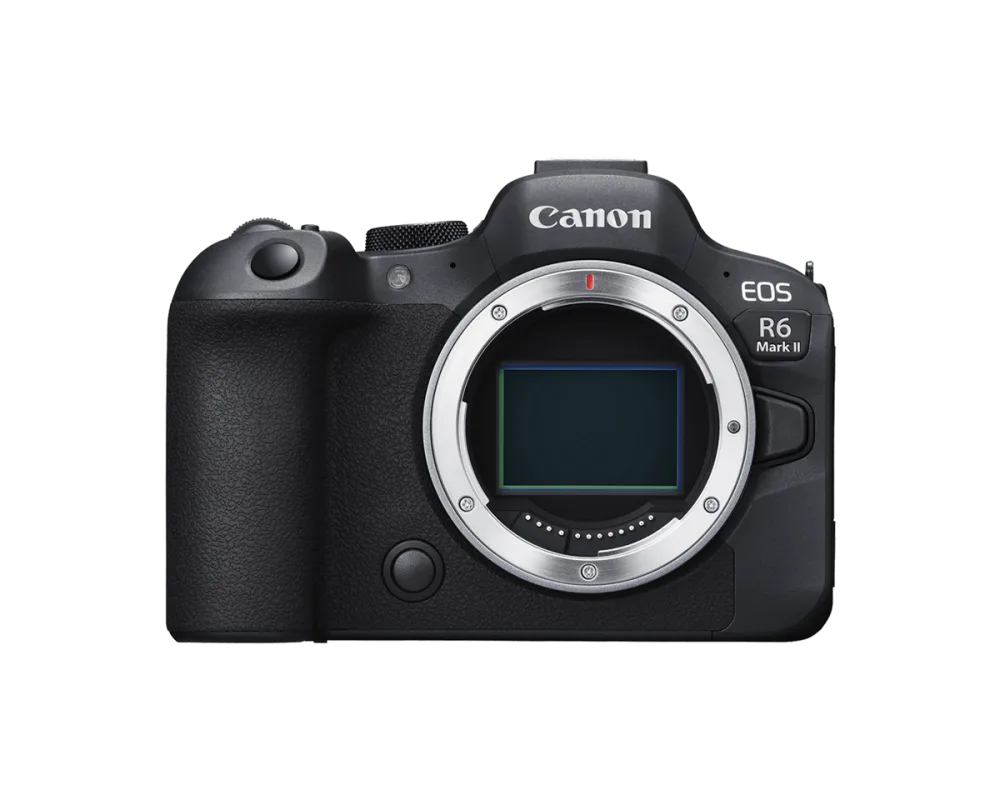 Canon · Full-frame · MirrorlessCanon EOS R6 Mark IIfrom $1,740See price comparison →
If you want a full-frame body that stays manageable in a bag without gutting the feature set, this is where we’d start. It’s a full-frame mirrorless body with the kind of autofocus and hybrid capability that makes it a genuine do-everything camera rather than a compromise. It is not the absolute lightest full-frame body you can buy (that’s a different conversation), but it’s the one we’d point most buyers toward when they want full-frame quality and don’t want to think about weight every time they pack.
Pricing moves around, so check the live price across retailers before you commit. This is a body that shifts.
Best value lightweight full frame: Nikon Z5 II
In our catalog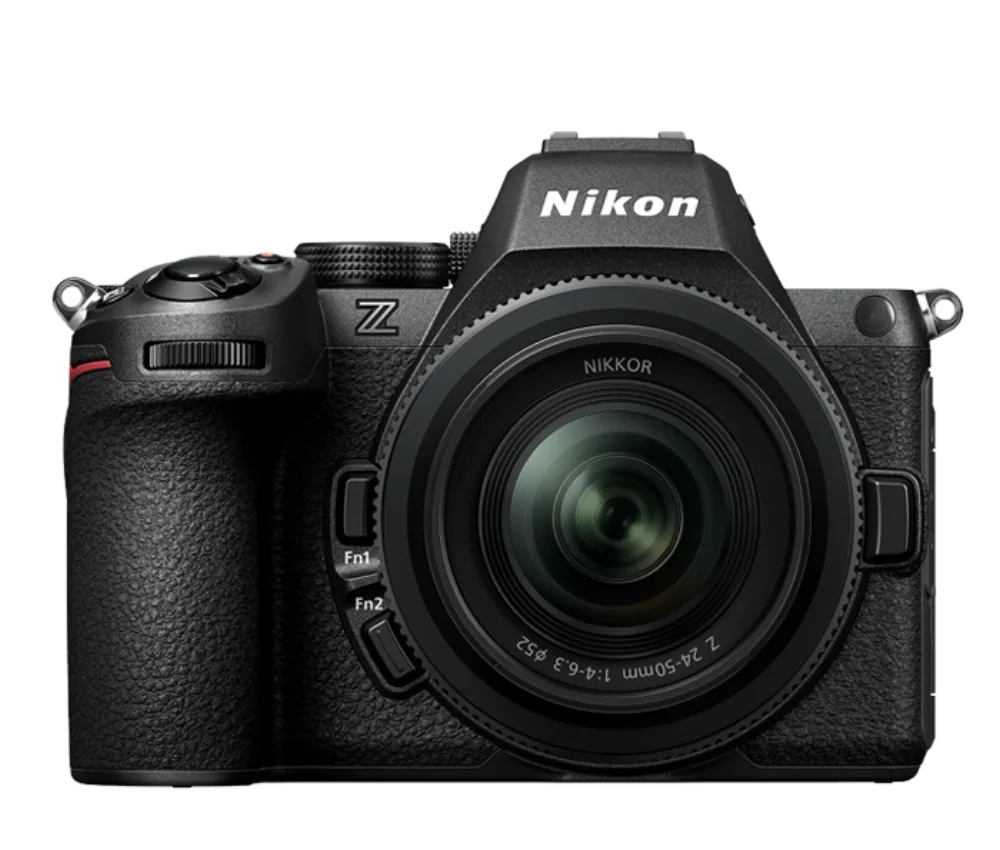 Nikon · Full-frame · MirrorlessNikon Z5 IIfrom $1,500See price comparison →
This is our value pick, and it’s the one we’d hand to someone who wants full-frame without paying midrange-hybrid money. The Z5 II uses a 24MP-class full-frame sensor, includes 5-axis IBIS, and, unusually at this price, offers dual UHS-II SD card slots, which is genuinely useful for travel backup. Video goes up to 4K/60p, though that mode applies a crop, so plan your framing accordingly.
It’s not ultra-light in the way the smallest bodies are, but it’s modest for full frame, and the feature-per-dollar math is hard to argue with. Check the live price before you buy. If it’s meaningfully below the usual range, it’s worth a look.
If weight is the single priority: Sony a7C II
In our catalog Sony · Full-frame · CompactSony a7C II$1,782See price comparison →
The a7C II is the body we’d name when someone says “lightest possible full frame, don’t care about the rest.” It’s a compact full-frame mirrorless body with a 33MP sensor and 5-axis IBIS, and it’s one of the lighter full-frame mirrorless bodies on the market. The rangefinder-style design keeps the profile low, which matters more than spec sheets suggest when you’re actually carrying it all day.
Check the live price before you commit. It typically costs more than the Z5 II for the size advantage. That’s the trade, stated plainly.
If you want light and video-first: Panasonic Lumix S9
In our catalog Panasonic · Full-frame · CompactPanasonic Lumix S9from $1,230See price comparison →
The S9 is a compact full-frame creator body with a 24MP-class sensor, IBIS, and video up to 6K/30p. It’s the pick for someone whose priority is a small full-frame body that shoots strong video, in the L-mount ecosystem. Check the live price before you buy.
What you give up, honestly
Light full-frame bodies are not free. Expect shorter battery life than a mid-size body, and accept that dual card slots are less common in the smallest models. Some very light bodies (the Canon EOS R8 class, for example) omit IBIS entirely to save weight and cost, which is a real decision point if you shoot handheld in low light or video. And the smallest bodies pair best with small primes (35mm, 50mm, 85mm f/1.8) and compact zooms; put a big telephoto on a 400g body and you’ve defeated the point.
On price honesty
We compare prices across major retailers and manufacturers, and we point you toward the best available option, at no extra cost to you. Our goal is to show you genuine current prices rather than inflated “was” pricing or made-up discounts; where we can’t stand behind a specific figure as the current best, we’d rather tell you to compare than quote it. Price and availability change constantly, so compare a few sources before you commit. Price history and drop alerts can be useful, but availability varies by retailer.
Our advice on timing: know the typical street price for the body you want, then wait for a real dip rather than a manufactured one. New is rarely necessary. A last-generation body at a genuine low is usually the better buy than this year’s model at full MSRP.
The price is the price. We just help you find the best one.
Find the camera worth buying
We compare live listed prices and link you straight to the lowest one. No fake discounts.