Point-and-Shoot vs Mirrorless: Which Is Right for You?
One trades flexibility for grab-and-go simplicity; the other trades simplicity for room to grow. Here is how to tell which trade fits your life.
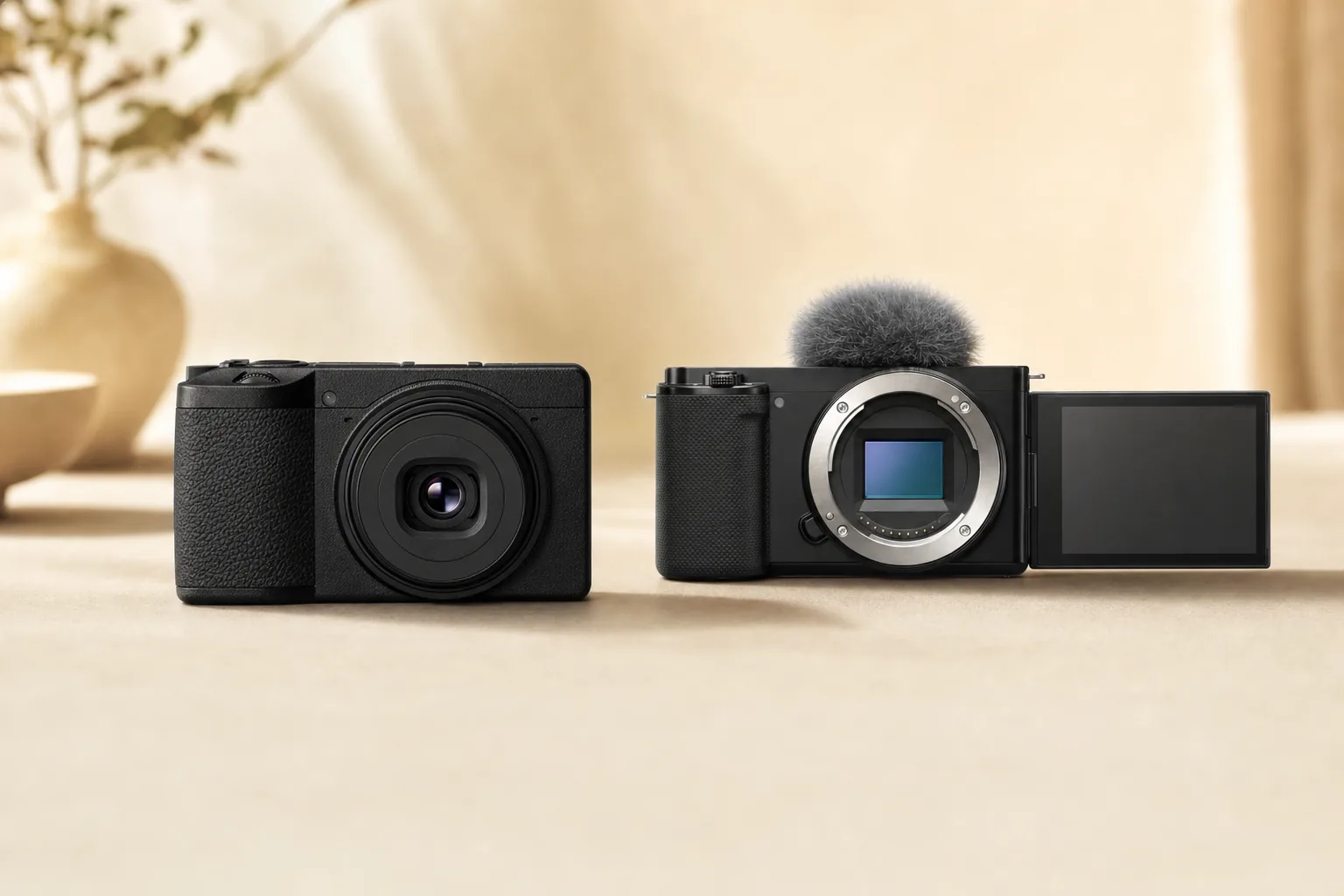
Point and shoot vs mirrorless is really one question: do you want a camera you grab and go, or a camera you grow into?
A point-and-shoot is a single sealed package: lens included, nothing to add, turn it on and shoot. A mirrorless camera is a system: body plus lenses, more capability, more decisions, more cost over time. Neither is better. They solve different problems, and buying the wrong one for how you actually shoot is the most common beginner mistake.
Here’s how to match the camera to your life.
What each type actually is
A point-and-shoot (compact) has its lens permanently built in. Self-contained, sealed, done. Modern premium compacts are far from the cheap pocket cameras of the early 2000s (some carry large sensors and excellent lenses), but the defining trait is that the lens never comes off.
A mirrorless camera has an interchangeable lens mount. Body is one purchase. Lenses are separate. Wide lens for landscapes, fast prime for portraits, telephoto for wildlife, all on the same body. “Mirrorless” just means it lacks the flipping mirror of an old DSLR, which is why these bodies are smaller than DSLRs while keeping the swappable-lens advantage.
Portability: the compact’s home turf
This is the clearest split. A premium compact slips into a jacket pocket and weighs almost nothing. A mirrorless body is still reasonably small, until you add a lens or two, a charger, and a bag. Then you’re carrying a kit, not a camera.
For travel-light, street, and everyday-carry shooters who would otherwise leave a bigger camera at home, the compact’s portability is its single biggest advantage. The camera you actually carry beats the theoretically better one you left behind.
A textbook example of how good a fixed-lens compact can be:
In our catalog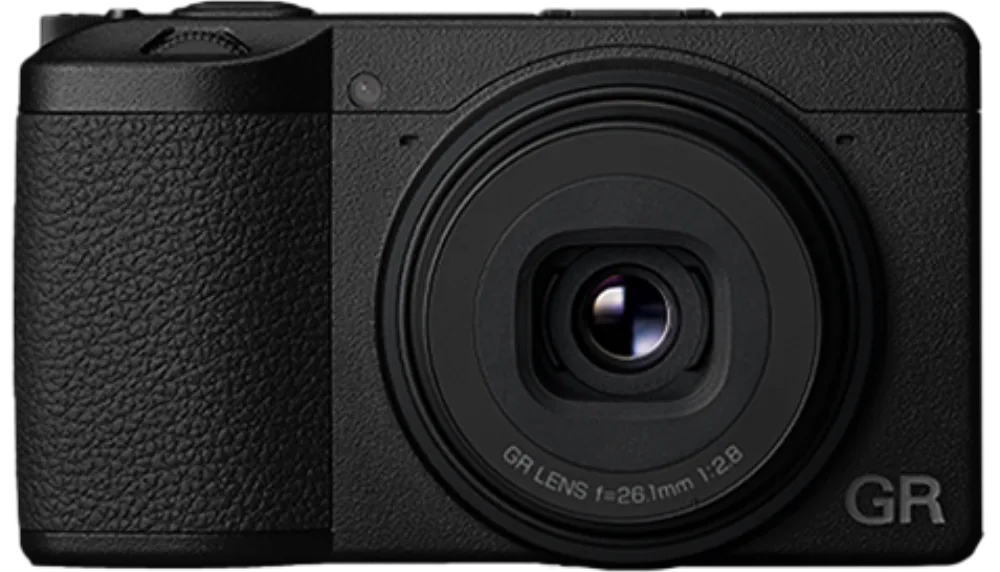 Ricoh · APS-C · CompactRicoh GR IIIx$1,250See price comparison →
Image quality: it’s the sensor, not the lens mount
The old rule (interchangeable lenses always mean better photos) is outdated. Image quality is driven mostly by sensor size and lens quality, not by whether the lens detaches. A premium compact with a 1-inch or APS-C sensor can out-shoot an entry mirrorless paired with a cheap kit lens.
Where mirrorless pulls ahead is the ceiling. A large sensor body with a fast, high-quality lens reaches image quality no fixed-lens compact can match, especially for shallow depth of field and serious low-light work. But that ceiling requires a real lens investment. The kit zoom that ships in the box usually isn’t it.
A popular benchmark for what a 1-inch-sensor compact can do:
In our catalog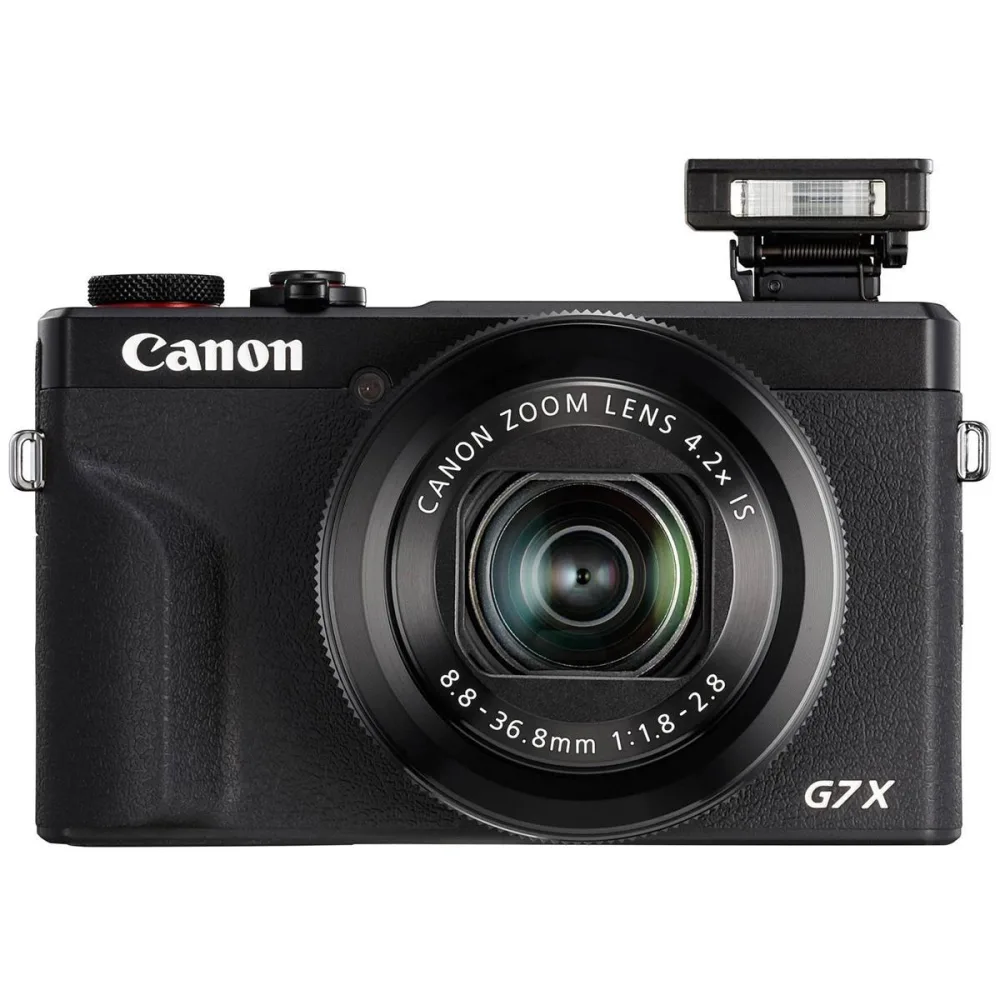 Canon · 1-inch · CompactCanon PowerShot G7 X Mark III$1,030See price comparison →
Cost: the body price is just the beginning
This is where mirrorless gets consistently misjudged. The body price is the start, not the total. A real mirrorless kit means lenses, and good lenses often cost as much as the body or more. Budget for at least one quality lens beyond the kit zoom and your spend climbs quickly.
A compact is a single, known price. No surprises. That makes premium compacts feel expensive on the shelf next to a cheap mirrorless body, but once you add the lenses a mirrorless system actually needs, the math often evens out, and the compact never asks for more.
A common starting point in mirrorless, genuinely affordable and built specifically for creators:
In our catalog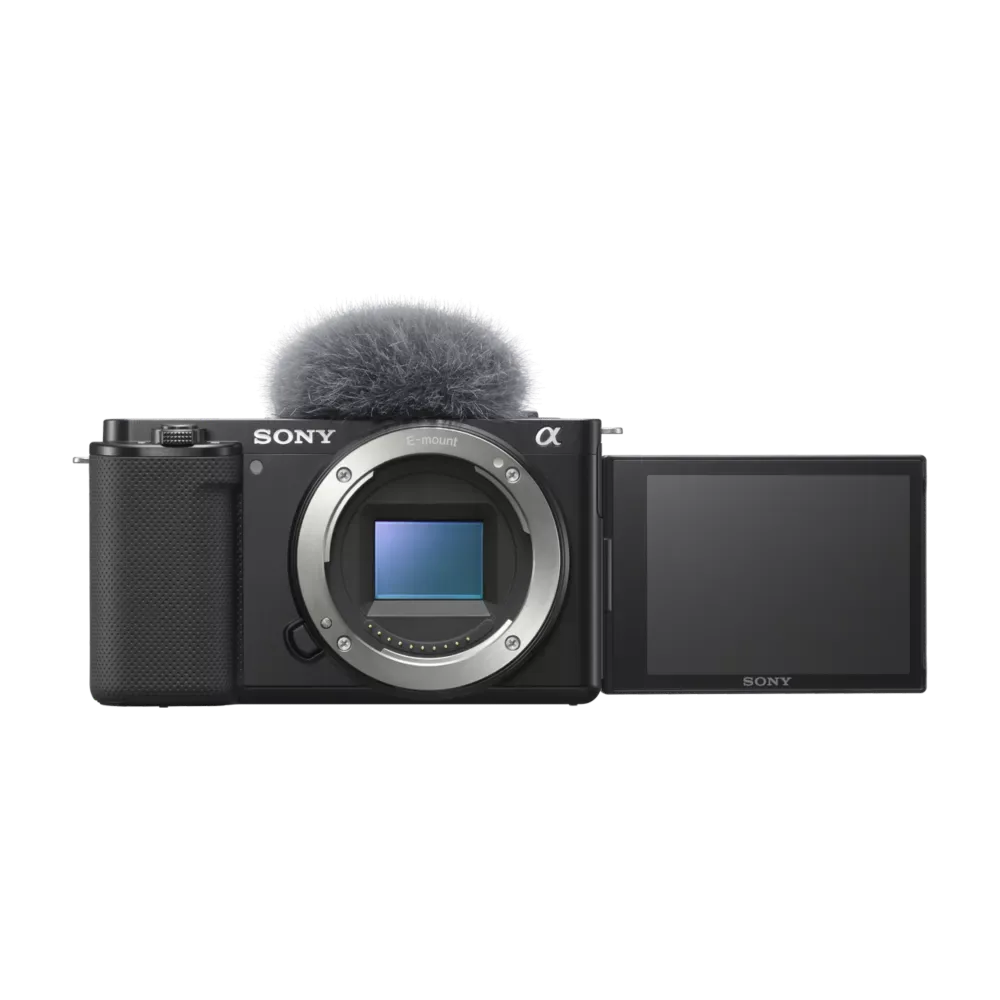 Sony · APS-C · MirrorlessSony ZV-E10from $586See price comparison →
Learning curve: simplicity vs control
Point-and-shoots are built to be picked up and used. Auto modes are reliable, settings are fewer, and there’s no lens decision to agonize over. For a casual shooter, a gift recipient, or anyone who wants good photos without homework, that simplicity is a feature, not a limitation.
Mirrorless rewards learning. Manual controls, lens choices, and deep menus give you enormous creative range, but they ask for time. If you enjoy the craft, that’s the fun part. If you don’t, an over-bought mirrorless kit ends up living in auto mode in a drawer.
Side by side
| Factor | Point-and-shoot | Mirrorless |
|---|---|---|
| Lens | Fixed, built in | Interchangeable |
| Size and weight | Pocketable | Body plus lenses |
| Image quality ceiling | High (with large sensor) | Highest |
| Total cost | One known price | Body plus lenses, grows |
| Learning curve | Gentle, grab and go | Steeper, more control |
| Room to grow | Limited | Full system |
| Best for | Travel, everyday, simplicity | Hobbyists, pros, creators |
Which should you pick?
Pick a point-and-shoot if you:
- Want a camera you’ll actually carry every single day
- Value simplicity and never want to think about lenses
- Have a fixed budget with zero surprise costs later
- Shoot travel, street, family moments, everyday life
- Are upgrading from a phone but don’t want a hobby
Pick mirrorless if you:
- Want the best possible image quality and shallow depth of field
- Plan to learn photography or video as a genuine pursuit
- Shoot varied subjects that benefit from different lenses
- Are okay investing in lenses over time, not just the body
- Want a system that grows with your skills
Bottom line
Buy a point-and-shoot for the camera you’ll always have with you and never have to think about. Buy mirrorless for the camera you’ll grow into and keep investing in. The most expensive camera is the one that doesn’t match how you actually shoot, so be honest about whether you want a tool or a hobby before you spend a cent.
Find the camera worth buying
We compare live listed prices and link you straight to the lowest one. No fake discounts.