Ricoh GR IIIx vs GR IV
The GR IIIx is the 40mm GR and the GR IV is the new 28mm body. Decide on focal length first, then on the newer sensor.
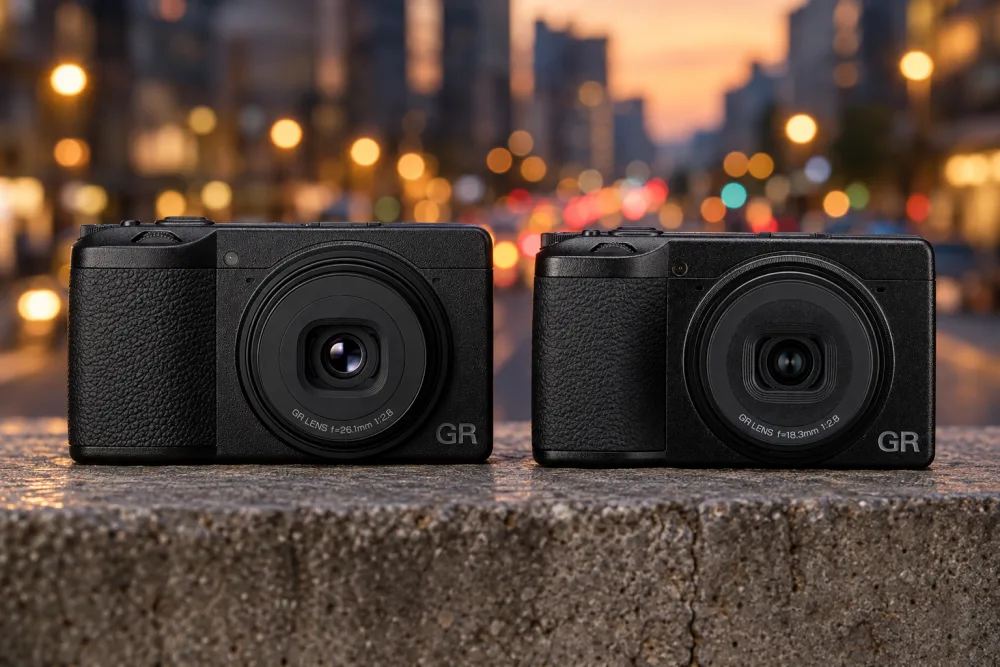
Ricoh GR IIIx vs GR IV is a focal-length decision before it is anything else: the GR IIIx has a 40mm-equivalent lens and the GR IV a 28mm, on the same pocket-sized APS-C idea. The GR IV adds a newer 25.7MP sensor, 5-axis stabilization and built-in memory, but if you see the world at 40mm, the GR IIIx is still the camera to buy.
In our catalog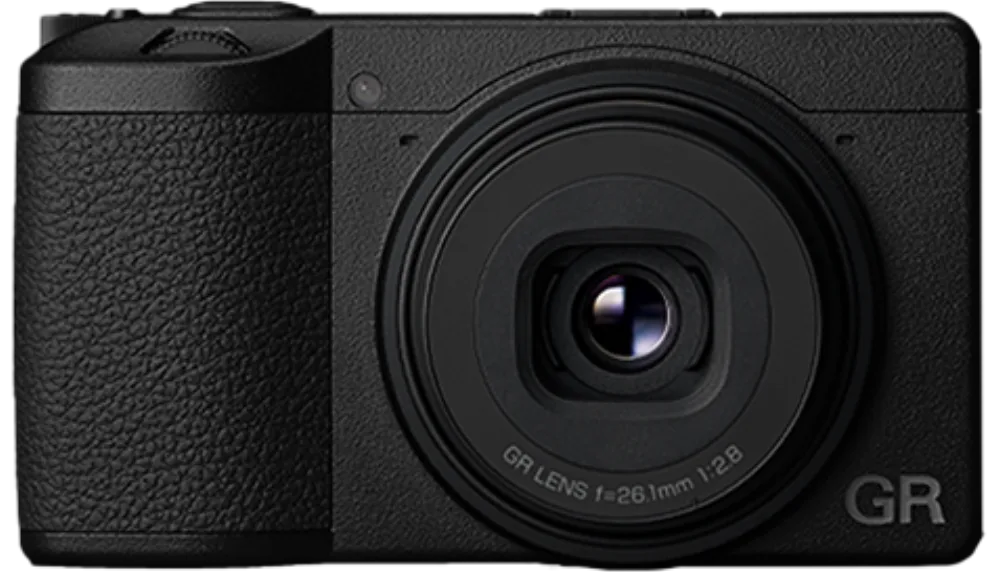 Ricoh · APS-C · CompactRicoh GR IIIx$1,250See price comparison →
In our catalog
 Ricoh · APS-C · CompactRicoh GR IVfrom $1,597See price comparison →
28mm vs 40mm: the choice that decides it
A 28mm view is wide: streets, rooms and scenes with context around the subject. The GR IIIx’s 26.1mm f/2.8 lens gives a 40mm-equivalent view, tighter and closer to how many people frame portraits and street details.
Neither lens zooms, so choose the one that matches how you already see. If you usually crop your phone shots in, 40mm will feel natural; if you usually step back for more, 28mm will.
What the GR IV adds over the GR III generation
The GR IV moves to a 25.7MP sensor from the GR IIIx’s 24MP and to 5-axis sensor shift from 3-axis, and it adds 53GB of built-in memory. The GR IIIx keeps its Snap Focus mode and built-in 2-stop ND filter, and at roughly 262g it stays easy to carry.
Should you wait for a GR IVx
There is no 40mm GR IV in our catalog to price today. If you want 40mm now, the GR IIIx is the camera that exists, and it is a current model with a live price, so buying it does not mean buying leftover stock.
Ricoh GR IIIx vs GR IV price today
Both cards above show the live price. The GR IIIx sits lower, so the gap is what you pay for the newer sensor, the stabilization and the wider lens.
How each pairs with the Fujifilm X100VI decision
If you are also weighing the Fujifilm X100VI, a 35mm-equivalent compact with a 40.2MP sensor, in-body stabilization and a hybrid viewfinder in a larger body, read Fujifilm X100VI vs Ricoh GR IIIx. The GR IV is the closer match on stabilization, the GR IIIx the closer match on focal length.
Which one to buy for street and travel
Buy the GR IIIx if you shoot people, details and tighter street frames. Buy the GR IV for wide street, travel scenes and interiors, or if you shoot handheld after dark and want the stronger stabilization.
If 28mm suits you and you want a GR for less, the discontinued Ricoh GR III is still listed at Ricoh direct.
Skip both if you want a zoom. Our pocket camera guide covers compacts that zoom, and fixed-lens compact vs interchangeable-lens mirrorless covers the bigger step.
Pick your focal length first and the GR IIIx vs GR IV choice makes itself; the live prices above show what each costs today.
Find the camera worth buying
We compare live listed prices and link you straight to the lowest one. No fake discounts.